
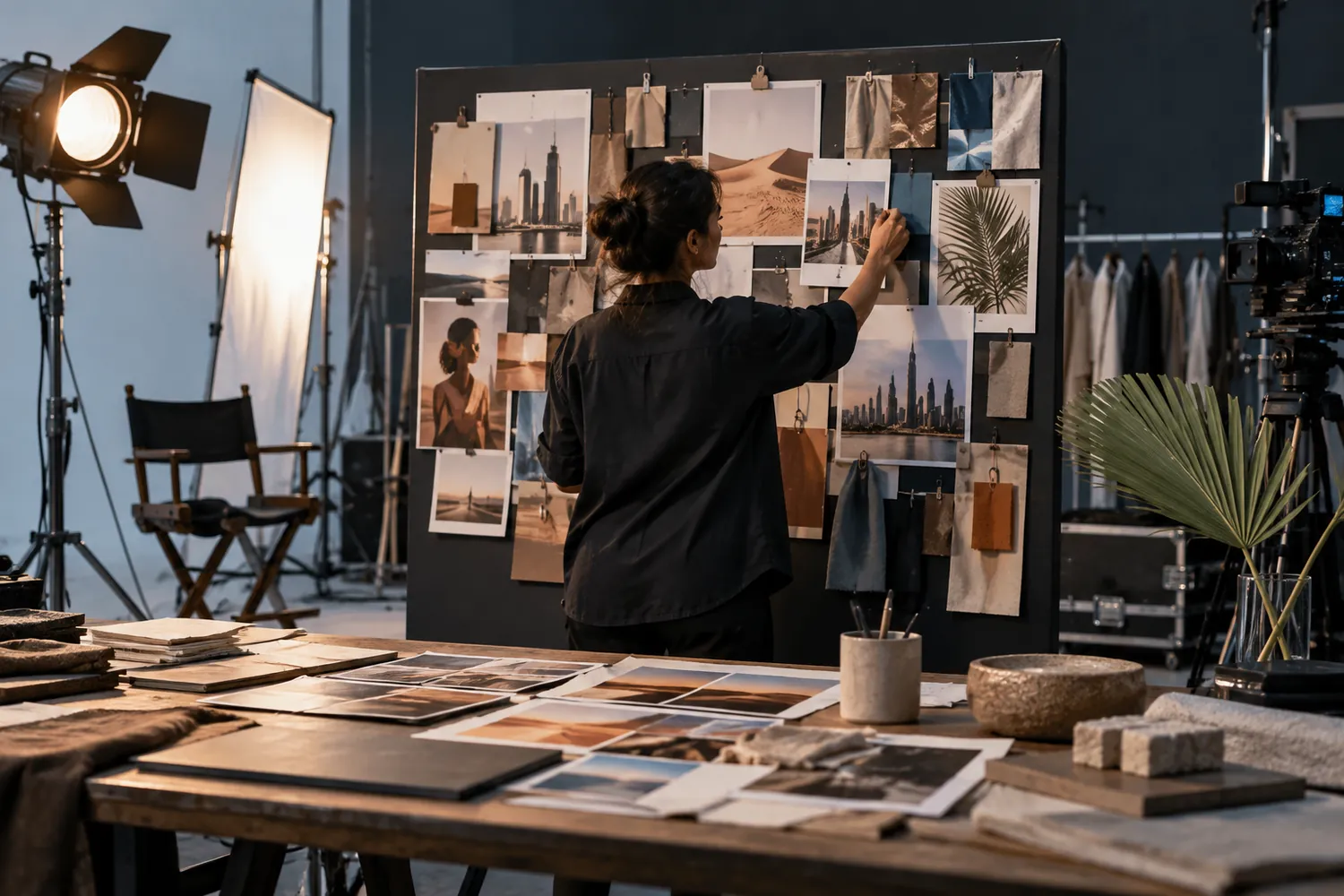
When a client compares two photography quotes, the line item that is easiest to skip past is art direction, because it produces nothing visible on its own — no photo, no video, no deliverable a client can hold up and point at. What it produces instead is every decision that made the actual images look intentional rather than accidental, and its absence is usually only obvious once the finished set already exists and quietly does not work.
What gets decided before the camera turns on
Art direction is the set of choices made ahead of the shoot: which colours the set, props and wardrobe should use so the images feel like they belong to one brand; how the composition should guide the eye toward what actually matters in the frame; what mood the lighting should create and why; and how a single shoot's images will still look coherent as a set once they sit side by side on a website, a feed and a print piece. None of this is visible in the final photo the way a prop or a model is visible — but its presence is what makes the photo feel deliberate rather than assembled.
What a shoot without it actually looks like
A shoot with a skilled photographer but no art direction rarely produces bad individual photos — the technical execution can still be excellent. What it produces is a set of images that do not obviously belong together: colours that clash slightly from one setup to the next, compositions that each solved their own frame without any shared logic, a mood that shifts from image to image because nobody decided what the brand should feel like across the whole set. Clients often cannot immediately name what is wrong with a set like this. They can just tell it does not feel like one coherent shoot, and that instinct is usually correct.
Why this is genuinely hard to fix afterward
Colour grading and retouching can smooth over some inconsistency after the fact, but they cannot manufacture a composition that was never planned, or recover a mood a set was never lit for. A photographer working alone on the day is also simultaneously managing lighting, camera settings, timing and the subject — there is a real limit to how much of the bigger creative picture one person can hold in mind while also solving in-the-moment technical problems. This is precisely the gap an art director closes: someone whose entire job during the shoot is to watch the bigger picture while everyone else solves the immediate problem in front of them.
Why a mood board is not decoration
A mood board, reference set or shot list assembled before the shoot day looks like preparation paperwork, but it is where the actual creative decisions get made and agreed on while they are still cheap to change. Disagreeing about a colour palette on a mood board costs nothing. Disagreeing about it once the set is built, the lighting is rigged and the model is on set costs the rest of the day. The planning stage is where art direction earns its cost, well before the shutter is ever pressed.
What this actually buys a client
A shoot with real art direction produces a set of images that reads as one thing — one brand, one mood, one set of decisions — rather than a collection of individually fine photos that happen to have been taken on the same day. That coherence is what makes a set of images usable across a website, a campaign and a feed without looking stitched together from different shoots, and it is very difficult to add after the fact through editing alone.
Our branding team works through these decisions before a single frame is captured, because the difference between a good photographer and a coherent set of brand images is almost always the direction, not the equipment. This is one of the variables that separates two quotes that otherwise look similar on paper — see what a commercial shoot actually costs for how the other variables stack up alongside it.


