
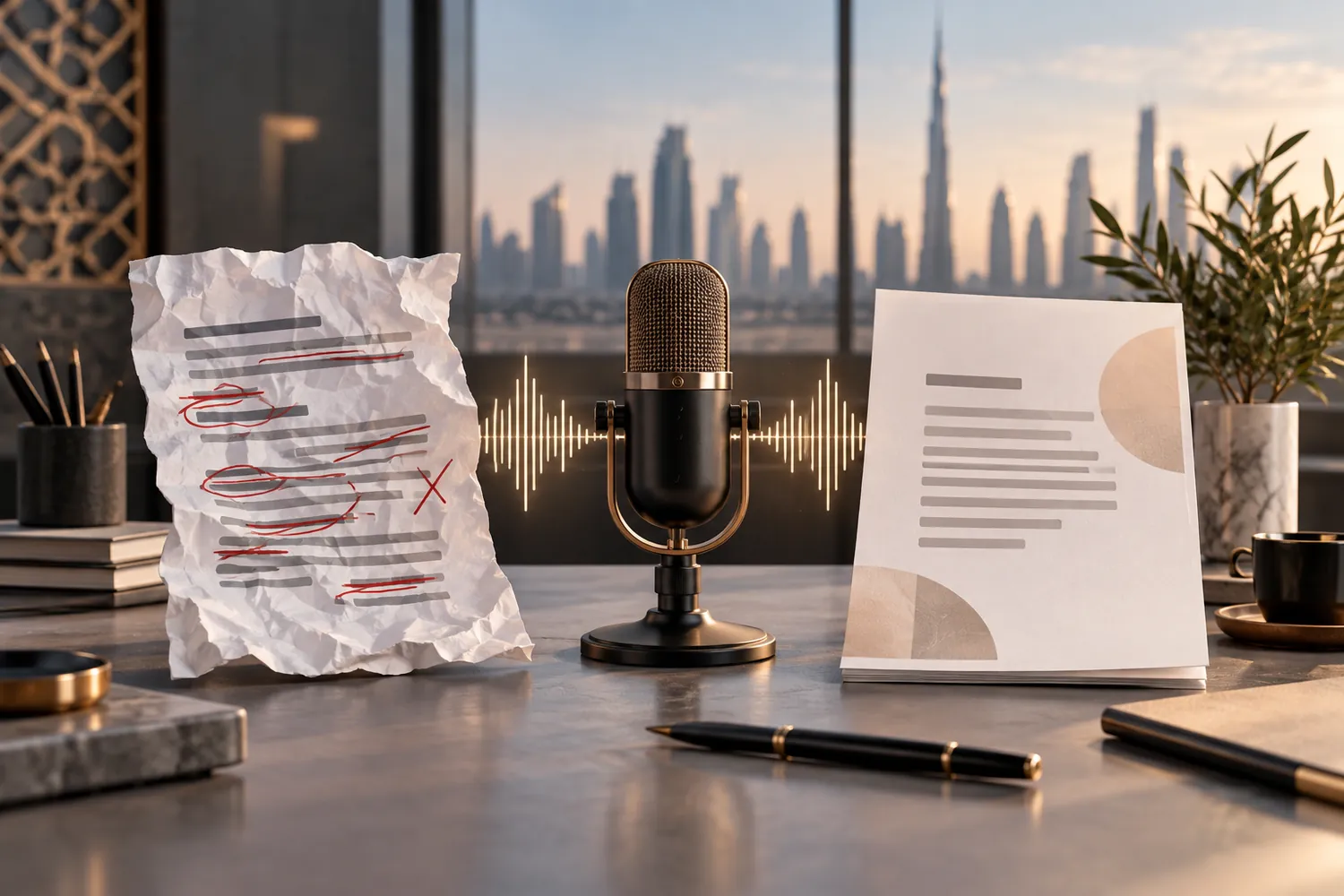
Ask five different AI tools to write a product description and, stylistic quirks aside, they tend to converge on the same competent, slightly generic register — clear, correct, and indistinguishable from what a competitor's AI-assisted draft would also produce. That convergence is exactly the problem for a brand that has spent years building a specific way of sounding: the tool that speeds up drafting is, by default, also the tool most likely to erase the one thing that made the writing recognisably yours.
Why generic is the default, not a flaw
A general-purpose AI model is trained to produce broadly acceptable writing across every industry and tone it might be asked for, which makes it reliably competent and, without deliberate steering, reliably average. It isn't failing at the task — it's succeeding at a different one, optimised for correctness and clarity rather than for sounding like one specific company with a specific point of view. Treating the unguided output as a finished draft is where voice quietly disappears.
A voice document is worth more than a long prompt
A short, concrete reference — actual sentences the brand has published that it's proud of, alongside a few it wouldn't publish and why — gives an AI tool something to pattern-match against that a paragraph of adjectives ("friendly but professional") never can. "Friendly but professional" describes almost every brand's aspiration and therefore steers nothing; five real sentences and the specific reasons two other real sentences were rejected steer quite a lot, because they show the boundary rather than describing it abstractly.
Generation is a first draft, not a final one
The workflow that actually protects voice treats AI output as raw material for a human edit pass, not as publishable copy — the same way a strong first draft from a junior writer would be treated. The AI draft solves the blank-page problem and often gets structure and coverage right; a human pass then does the smaller, higher-leverage work of swapping generic phrasing for the specific words and rhythms that make the piece sound like the brand wrote it, not like a tool did.
Where speed actually comes from
The real time saved isn't in skipping the edit pass — it's in never facing a blank page, having a structurally sound draft to react to rather than originate, and being able to produce far more first drafts in the same time, each still going through the same voice-preserving edit. A team that treats AI drafting as replacing the edit pass, rather than replacing the blank page, ends up publishing content that reads competently and sounds like nobody in particular.
What this doesn't cover
This is specifically about protecting how a company sounds while drafting faster — a separate question, covered elsewhere, is what AI-generated content does to search visibility and how it's ranked once published. The two questions matter independently: content can preserve a brand's voice perfectly and still need separate thinking about its performance in search, and vice versa.
This is one piece of the wider question of where AI genuinely helps a small business — the tools multiply output, but only a deliberate process keeps that output actually sounding like the brand that published it.
Our team builds a brand voice reference into a client's AI drafting workflow from the start, so speed and identity don't trade off against each other.


