
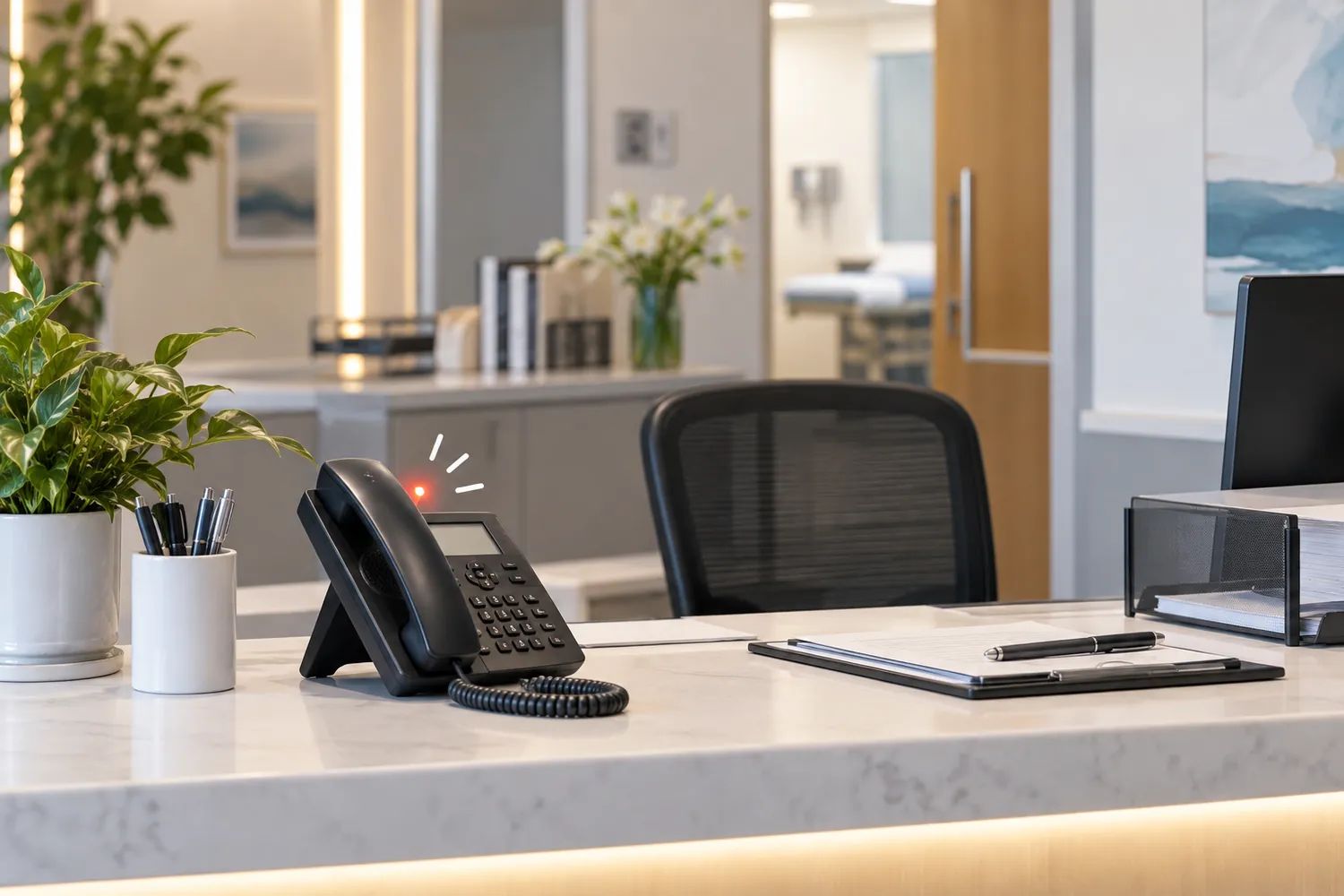
Someone with a medical concern rarely calls one clinic and waits patiently for a callback. They open a search result, call the first number, and while it rings they are already looking at the second and third. Whoever answers first — clearly, helpfully, with an actual next step — usually gets the booking, regardless of which clinic has the better doctor, the nicer facility, or the fairer price. Speed is not a nice-to-have on top of a good clinic. For a meaningful share of enquiries, it is the entire decision.
The enquiry that never counted as lost
A call that rings out, a WhatsApp message that sits unread until the next morning, a contact form that lands in an inbox nobody checks until Monday — none of these show up as a lost patient in any report, because they never became a lead in the first place. The person didn't cancel an appointment; they never got far enough to make one. This is exactly why the problem persists: it is invisible in the numbers a clinic normally reviews, because there is no record of the enquiry that quietly went nowhere.
Why the fastest answer usually wins, not the best clinic
A person searching with a specific concern is often anxious, and anxiety does not sit well with uncertainty. The clinic that responds within minutes with a clear next step resolves that discomfort immediately. The clinic that responds a day later is competing not just against other clinics but against the fact that the person has, by then, probably already booked somewhere else and quietly forgotten they ever contacted you. A slower response doesn't just risk losing the booking — it usually already has.
Where the ninety seconds actually get lost
A few patterns account for most of it: calls routed to a reception desk that is mid-conversation with a walk-in patient, after-hours enquiries that sit with no acknowledgment until the next working day, WhatsApp treated as something to answer "when there's a gap," and web form submissions that land in an inbox nobody owns. None of these is a failure of effort — they are gaps in who is explicitly responsible for the first response, as distinct from the full consultation that follows it.
What a ninety-second standard actually requires
It rarely requires a bigger team. It requires separating the first acknowledgment from the full answer: a message that confirms the enquiry was received and states when a real answer is coming ("thank you, one of our team will call you back within the hour") buys the time a full response takes, without leaving the person wondering whether they were heard at all. An after-hours auto-reply that sets an honest expectation does more good than silence until 9am. And first response needs to be a named responsibility for someone on shift, not a task that belongs to "whoever is free," because that default is how it slips.
Measuring it so it doesn't quietly slip back
The metric worth tracking weekly is the time between an enquiry arriving and a human responding — not the time to booking, which measures something different. Left unmeasured, response time drifts back upward within weeks of any improvement, because nothing else in a busy clinic naturally protects it.
This sits inside the wider case for building patient acquisition on something more durable than price: a faster response costs nothing extra to run and converts enquiries a discount never reaches, because by the time a discount would matter, the person has usually already decided based on who answered first. It's one of the first things our team checks when auditing how a clinic's own funnel is actually performing, because it is often the cheapest fix available and the one most consistently ignored.


