
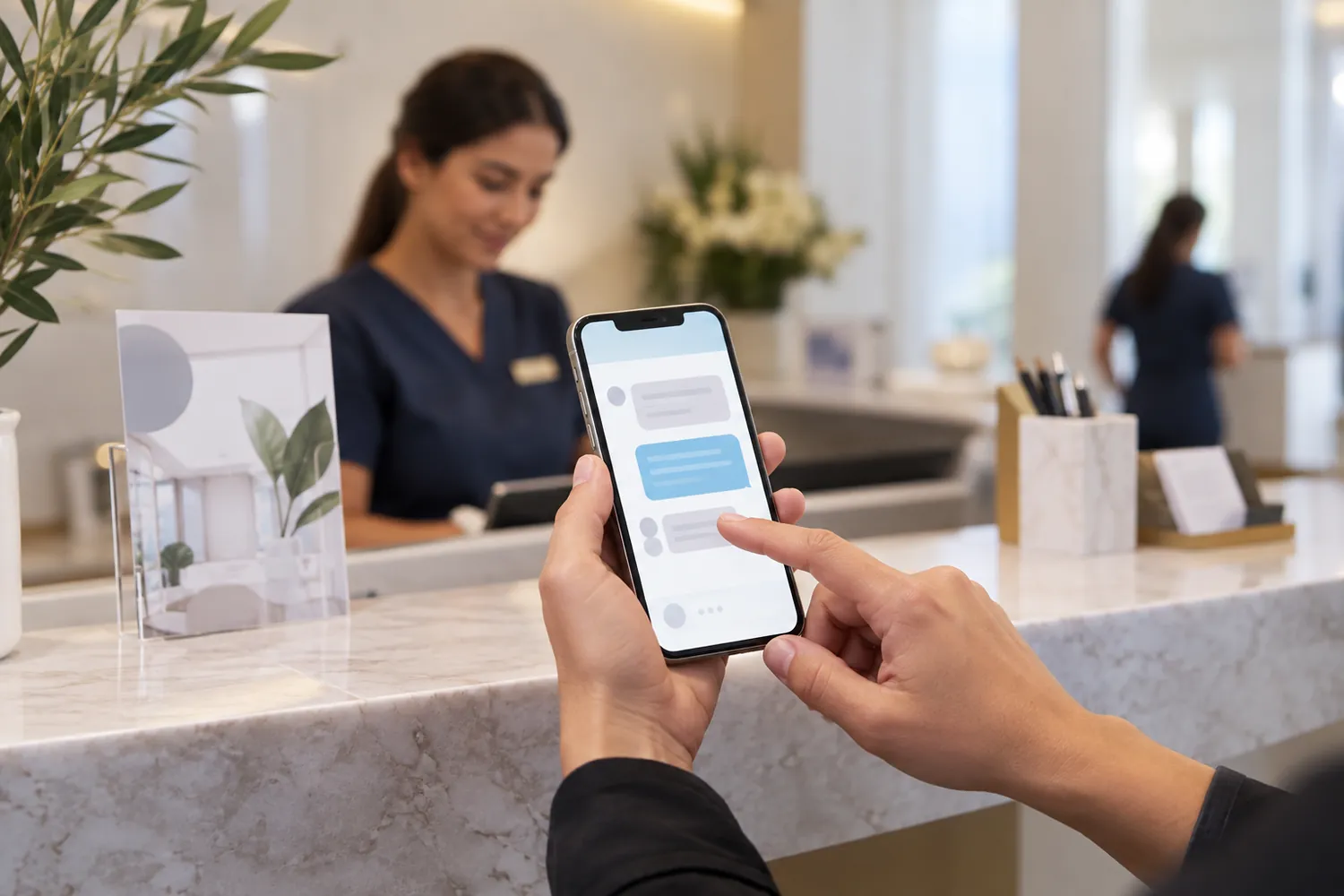
A review asked for at the wrong moment, in the wrong way, does more than fail to produce a review. It can leave a patient with the sense that the visit was, in the end, transactional — that the warmth of the care was in service of a rating rather than the other way around. Getting this right matters as much as getting it done at all, because a clinic's reputation depends on reviews that read as genuine, and a request that feels like pressure tends to produce exactly the flat, generic response that reads as anything but.
Timing: after the relationship, not during it
Asking in person, at the desk, immediately after treatment puts a patient in a position where declining feels awkward in a way it wouldn't over a message read alone, later, with no one watching. The better moment is once the outcome has had time to be felt — a follow-up window after treatment, not the door on the way out — when a patient can answer from an honest sense of how things went rather than a polite instinct not to disappoint someone standing in front of them.
Channel: wherever the patient is already comfortable, and always easy
A text or WhatsApp message with a direct link removes the two things that quietly kill review requests: friction and audience. Nobody has to search for the clinic, decide what to write from scratch, or feel like they're performing gratitude in front of staff. A single, low-friction link sent to a channel the patient already checks converts far better than a general request to leave a review sometime, which relies entirely on someone remembering to act on their own initiative.
Wording: optional in tone, not just in fact
The request itself should read as genuinely optional, not conditionally polite (something like "we would really appreciate it if you have a moment" rather than anything that implies the relationship depends on it). It should never be tied to an incentive, discount, or anything that could make the review's honesty questionable in the reader's eyes — a review a prospective patient trusts is worth more than a larger volume of reviews nobody quite believes. And it should ask a genuine, open question rather than pre-writing sentiment, since a request that suggests exactly what to say produces reviews that read as coached rather than felt.
What not to do
Reviews should never be requested from every patient regardless of how the visit went, and a clinic should never filter who gets asked based on a private read of how satisfied they seemed — both practices tend to violate platform policies and, more practically, tend to produce a review profile that eventually looks curated rather than real. The safer and more sustainable approach is a consistent, respectful ask sent to patients generally, with the wording, timing and channel doing the work of making a genuine yes more likely, rather than filtering who is asked. Where review handling brushes up against platform rules or a duty of confidentiality, it is worth checking current requirements with a compliance advisor before setting a policy, since the details vary and change.
Why this compounds
A small number of genuine, specific reviews, gathered without pressure, tends to outperform a larger number of generic ones, because a prospective patient reading them can tell the difference — specificity reads as real in a way five-star ratings with no text never quite do.
This is part of the same argument for building patient acquisition on trust that holds up rather than a discount that has to be repeated: a genuine review earns a new patient's confidence in a way no price ever will, and it keeps earning it long after the original visit is forgotten. Our team builds review requests into a clinic's existing patient communication rather than treating it as a separate campaign, because it works better woven into a relationship that already exists.


