
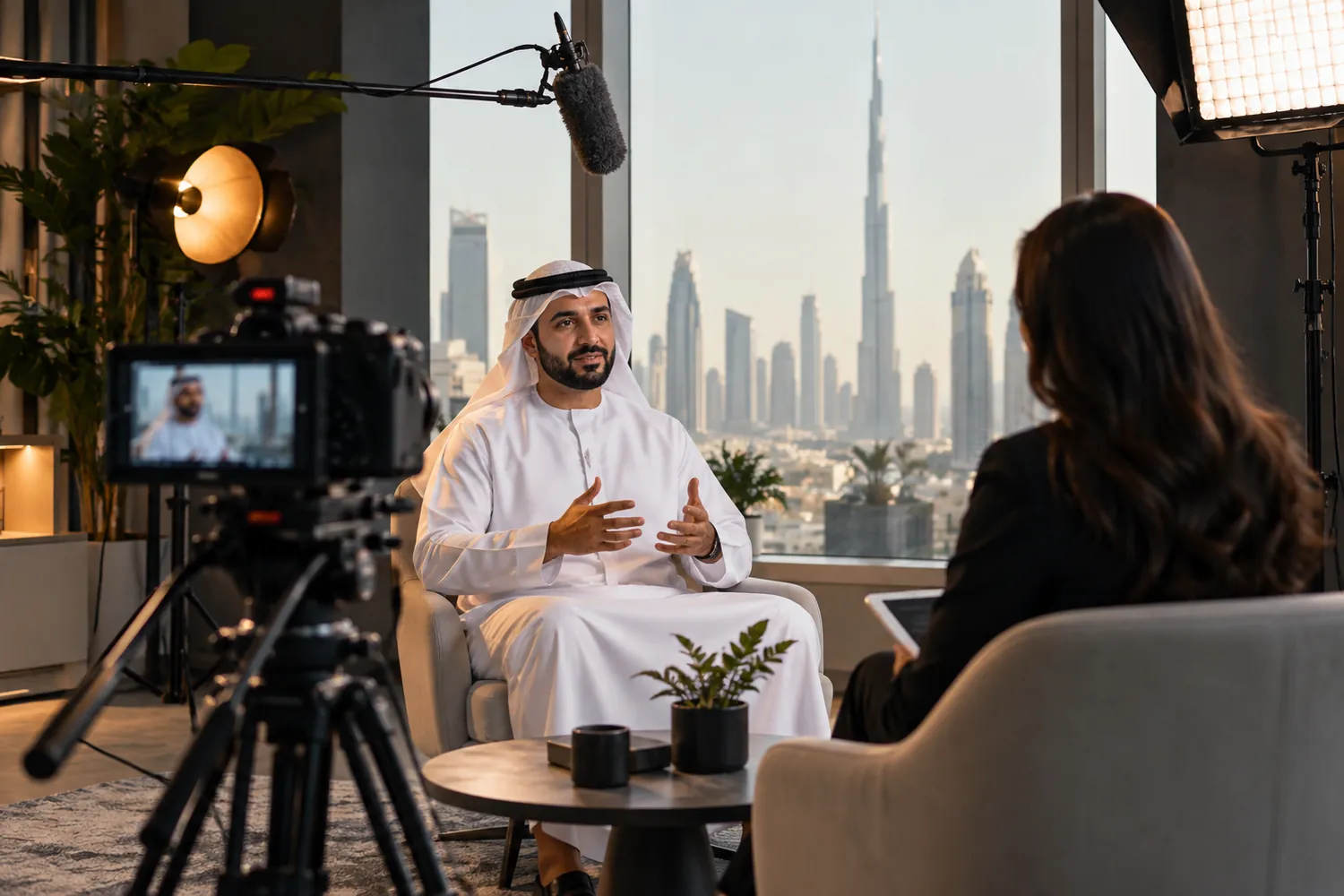
Most corporate videos share the same set of problems: a scripted executive reading from a teleprompter with visible effort, stock-music energy that does not match the calm delivery on screen, and a runtime that keeps going well past the point where the message was already made. None of this is a budget problem. A modestly produced video with a clear structure holds attention better than an expensively produced one built around the wrong choices.
The scripted-executive problem
A person reading a script, however well written, moves and sounds differently than a person answering a real question. Viewers register this difference within seconds, even if they cannot name it, and the video starts working against itself from the opening line. The fix is not a better script — it is replacing the script with a genuine question asked off camera, so the answer comes out as speech rather than recitation. This usually needs several takes and an edit that keeps the natural pauses, not a performance rehearsed until it sounds delivered.
The runtime problem
Most corporate videos are built to include everything the business wants said, rather than everything a viewer needs to hear to act. A video that states its point in the first thirty seconds and spends the rest illustrating it, rather than building up to a reveal at the end, respects the fact that most viewers decide whether to keep watching in the first few seconds and will not wait for a slow build.
The tone mismatch problem
Music and pacing chosen to sound impressive — sweeping strings, rapid cuts, an announcer-style voiceover — often fight against a message that is actually plain and useful. A viewer notices the mismatch between the grandeur of the production and the ordinariness of the claim, and the gap reads as inflated rather than confident. Matching the tone of the edit to the actual size of the claim usually makes a video feel more credible, not less polished.
What actually holds attention instead
A real person answering a real question, filmed with enough patience to let an honest answer happen rather than a rehearsed one. A structure that leads with the point, so a viewer who stops watching after twenty seconds still received the message. Specific, verifiable detail over abstract claims — a description of what actually happens day to day says more than a list of values a script insists the company holds. An edit that trusts silence and pause, rather than filling every second with music or a cut, because a viewer's attention often follows the pacing of real speech more comfortably than a heavily produced rhythm.
Why this matters for reuse, not just for one video
A corporate video built this way — genuine answers, a clear structure, a tone that matches the claim — also cuts cleanly into shorter clips for social and web use, because each honest answer already stands on its own rather than depending on the video around it for context. This is one of the reasons interview-style footage is worth planning for reuse across a single production day rather than treating a corporate film as a one-off deliverable.
Our production team builds corporate video around real answers and a structure that respects a viewer's patience, rather than a script written to sound impressive on paper.


