
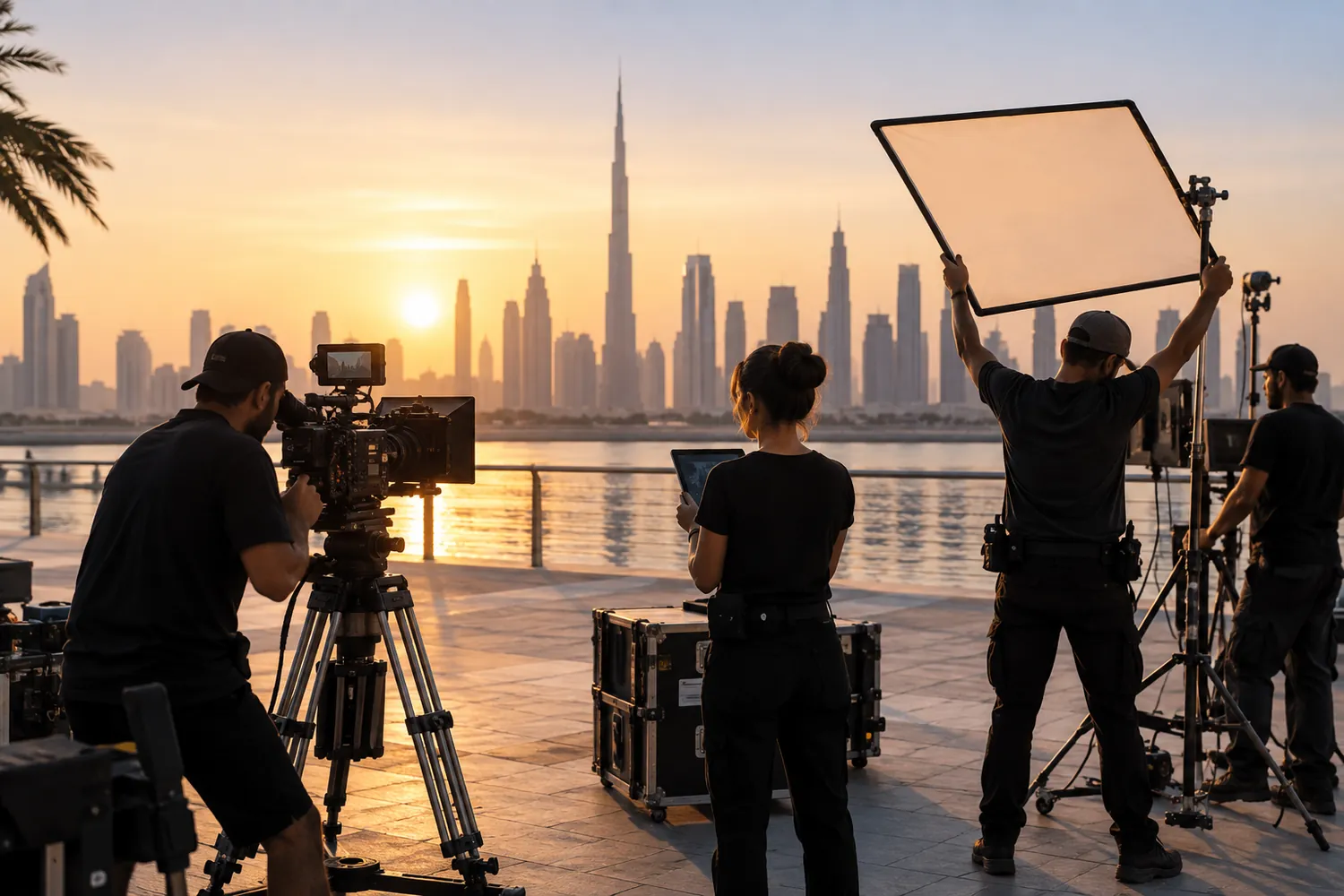
A quote that looks tight on the day rate can still fall apart if nobody accounted for a permit, because permit lead time is not something a crew can compress by working faster on the day. Anyone commissioning a shoot in Dubai should treat permissions as a planning variable with its own timeline, separate from the shoot day itself.
Where a permit is actually needed
A private studio or a location the business already owns or leases rarely needs anything beyond the owner's own permission. Public streets, beaches, malls, government-adjacent areas, and most outdoor spots with recognisable landmarks in the background are a different matter — filming there generally requires clearance from the relevant authority, and the requirement does not disappear just because the shoot looks casual or the crew is small. A single photographer with a phone gimbal walking through a public souq is still filming in a public space, and the rules apply to the activity, not the size of the crew carrying it out.
Lead time is the part people underestimate
A studio can often be booked with a few days' notice. A location requiring official clearance cannot — applications typically need to be lodged well ahead of the shoot date, and the exact turnaround depends on the location, the season and how complete the application is on first submission. Treating the permit as an afterthought once the creative concept is locked is one of the most common reasons a shoot date slips, and it slips in a way that is very hard to recover once other people — a venue, talent, a client's own team — are already booked around it.
What an application actually needs
Applications generally ask for specifics: the exact location, the dates and hours requested, what equipment will be used, how many people will be on site, and often a short description of what is being filmed and why. Vague answers slow the process down because they invite follow-up questions. A concept that is still being finalised the week before the shoot makes it very difficult to file an accurate application early enough to matter.
Heat and light are not separate problems from permits
Dubai's climate does not just affect crew comfort — it affects what is achievable at all. Outdoor shooting in the peak of summer during the middle of the day is genuinely difficult: heat affects equipment, talent endurance, and how long a set can realistically be held together outdoors. The practical answer most productions land on is shooting around sunrise or sunset, when the light is also more flattering, which means outdoor shoots are frequently built around a narrow window rather than a full day. A schedule that assumes eight hours of comfortable outdoor shooting in July is planning against a climate that will not cooperate.
Building the schedule around both constraints at once
The permit window and the usable daylight window do not always line up conveniently, and the realistic plan accounts for both from the start: applying early enough that the permit is confirmed well before the shoot date, and choosing shoot times that respect what the season's heat and light actually allow rather than what a generic "full day" quote assumes. A shoot planned this way rarely needs a rescue day. One planned around a best-case guess at both permits and weather often does.
Getting the permissions and scheduling right is part of what a properly briefed production team sorts out before the crew is booked, not something worked out on the morning of the shoot. It connects directly to what a commercial shoot actually costs: a location that needs a permit and a narrow shooting window is a different, and usually more expensive, proposition than a studio day, and a quote should reflect that difference honestly rather than discovering it midway through production.


