
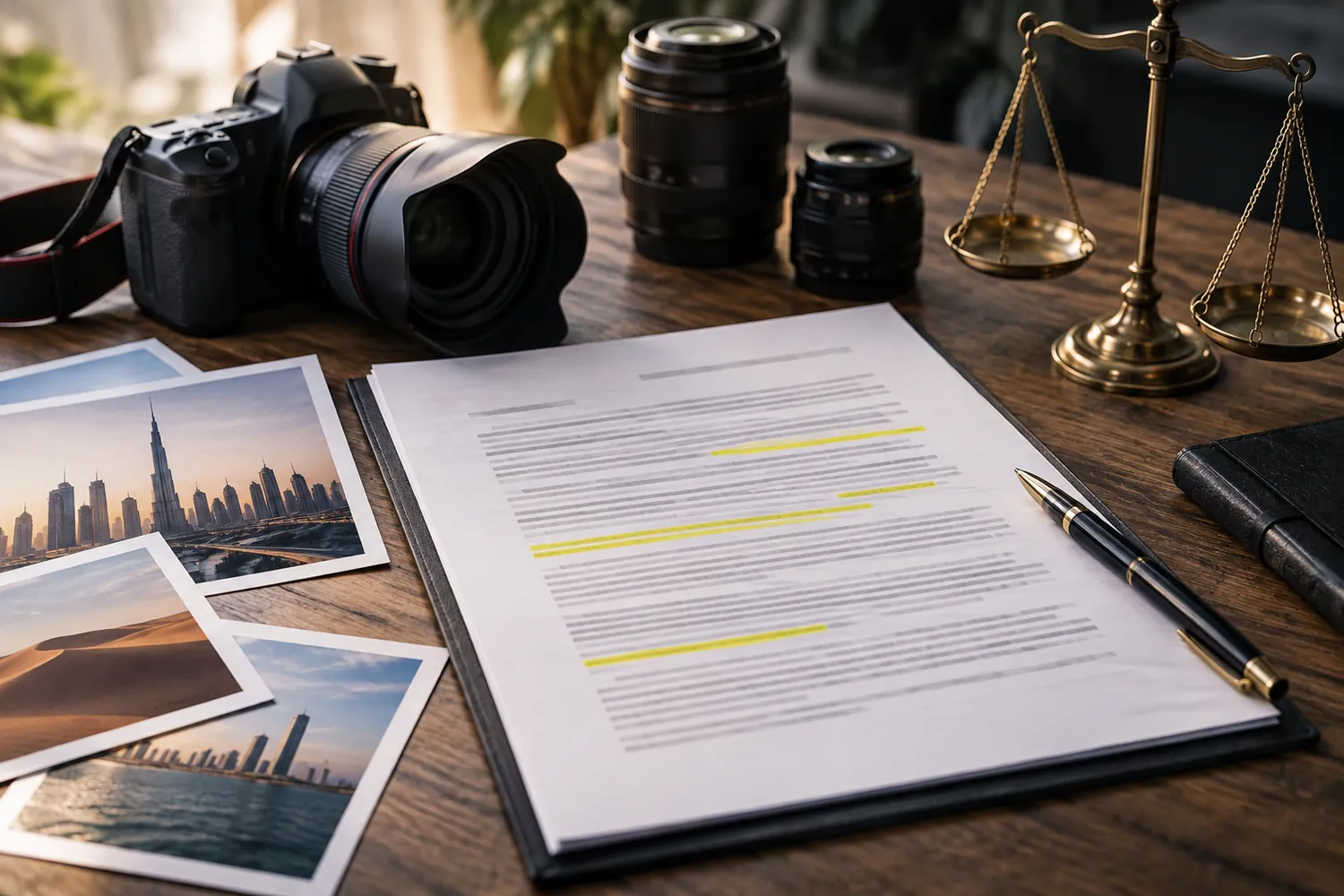
Two quotes for what looks like the same shoot can differ by a large margin, and the difference is rarely quality. It is usually the licence — what you are actually allowed to do with the images afterwards — and a lower number often means a narrower set of rights, not a better deal.
What "usage rights" actually covers
A photography or video licence is not a single yes/no permission; it is a bundle of four separate variables, and each one can be widened or narrowed independently: exclusivity (can anyone else, including the photographer, reuse or resell these images), territory (where geographically you're allowed to use them), duration (how long the licence lasts before it needs renewing or expires), and medium (which channels — web, print, paid ads, packaging, billboards — the licence actually covers). A quote that looks cheap because it only licenses web use for one year is not directly comparable to one that licenses every medium in perpetuity, even if the shoot itself is identical.
Exclusivity: who else can use the same images
Non-exclusive rights mean the photographer can license the same images to someone else, including a competitor, or use them in their own portfolio and marketing. Exclusive rights mean the images are yours alone to use, and typically cost more because the photographer is giving up future income from reselling that work. For most brand and product photography this distinction matters more than buyers initially assume — a competitor running the same product shot is a real, if uncommon, risk with non-exclusive stock-style licensing.
Territory: where the licence actually applies
A licence scoped to a specific country or region is cheaper than a worldwide licence, because it's a narrower right. This becomes a genuine problem the moment a campaign expands beyond its original market — running a UAE-licensed image in a European or US campaign without extending the territory isn't a grey area, it's outside the agreement, and it needs to be caught before the campaign runs, not after.
Duration: rights that expire
Some licences run for a fixed term — a year, two years — after which continued use requires renewal, sometimes at an additional cost. Others are perpetual, granted once and usable indefinitely. A fixed-term licence is not necessarily a problem, but it is a detail that needs to be tracked, because an image quietly running past its licence term on a website or in an ad is a liability nobody notices until it's raised.
Medium: which channels are actually covered
A licence written for "web use" doesn't automatically extend to print, paid social advertising, packaging or out-of-home. Each additional medium can be a separate line in the agreement, and assuming a broader right than what was actually purchased is one of the most common ways a business ends up using an image outside its licence without realising it.
What to ask before signing
Before agreeing to a quote, get explicit answers on all four variables — not just the headline price. Ask whether the rights are exclusive or non-exclusive, which countries or regions the licence covers, whether it expires and when, and which specific media it includes. A photographer or agency that answers these clearly and in writing is giving you a licence you can actually plan around; one that answers vaguely is a sign the cheaper quote may turn out to be the more expensive one once the gap in rights becomes a problem.
Getting the licence right at the point of booking connects directly to the wider planning covered in what a commercial shoot actually costs — usage rights are one more variable a proper quote should pin down before the shoot happens, not renegotiate after the fact.
HEYA's production team writes usage terms into every quote in plain language before the shoot is booked, so the licence you're paying for is the one you actually need — not the narrowest one that happened to produce the lowest number.


