
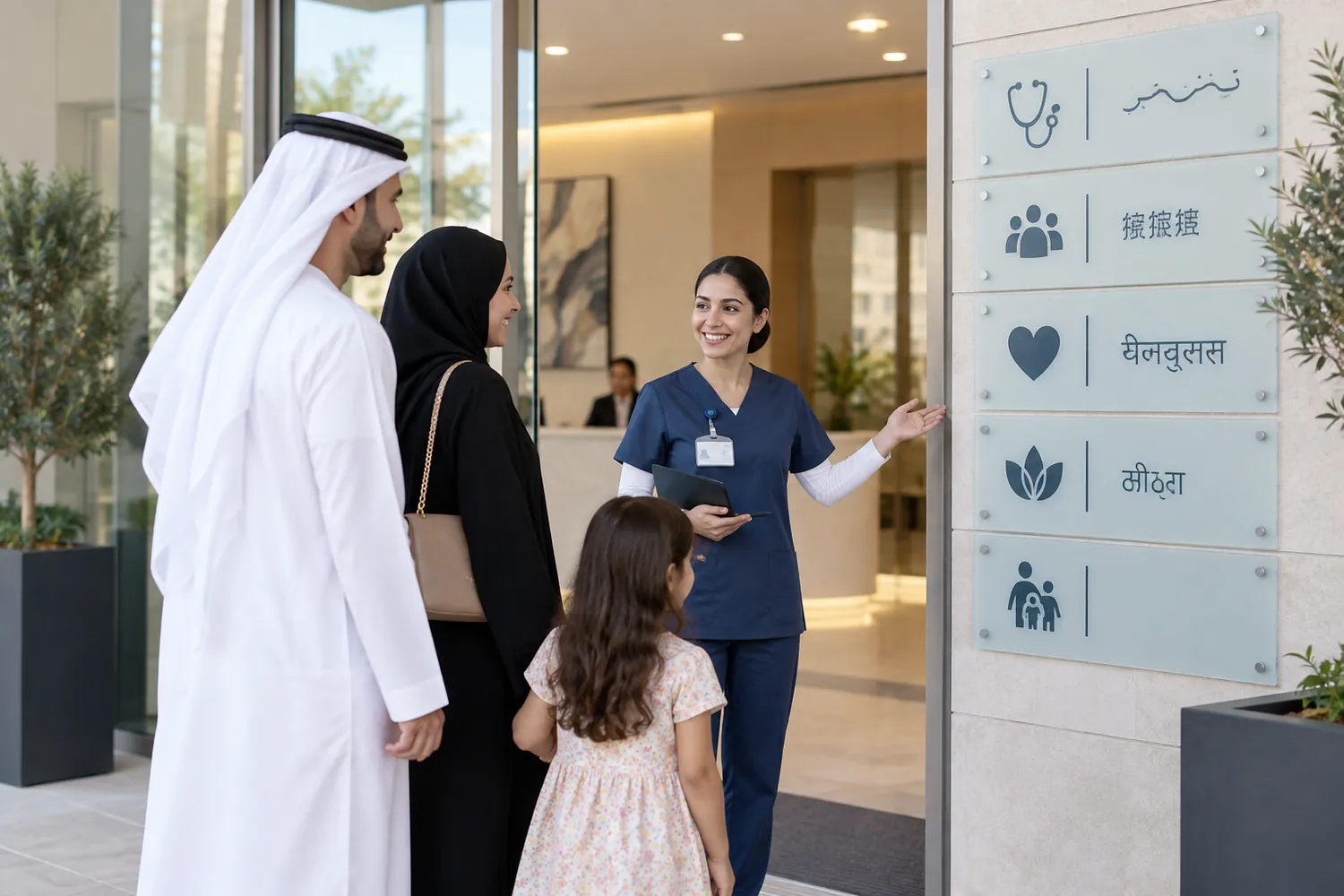
A clinic operating in a city built largely on expatriate residents is, in practice, serving patients across several first languages every single day, whether or not that reality is reflected anywhere in how the practice communicates. The website is usually the first place this gets addressed, and often the last, which leaves the actual patient journey — booking, reception, consultation, forms, follow-up — running in whichever language happened to be convenient for whoever built each piece of it.
The gap rarely shows up where it is easiest to notice
A translated homepage is visible and easy to point to as evidence of multilingual service, but it is rarely where a patient actually struggles. The harder moments are the ones nobody screenshots: a consent form full of clinical terms in a second or third language, a phone call where a booking detail gets lost in translation, a discharge instruction that gets nodded along to without being fully understood. These are the points where a language gap becomes a real risk to care quality, not just an inconvenience, and they sit well past the point most clinics stop thinking about language at all.
Deciding which languages actually matter
Trying to support every language spoken in a diverse city is neither realistic nor necessary. What matters is knowing, from the clinic's own patient base rather than assumption, which two or three languages cover the large majority of appointments, and making sure those are genuinely well served — at reception, on the forms patients actually have to read and sign, and in the follow-up messages after a visit — rather than spreading thin effort across many languages and doing none of them properly.
Where translation alone is not enough
A literal translation of a form or an instruction can be linguistically correct and still fail the patient, when tone, formality or a culturally specific way of phrasing a sensitive instruction gets lost along the way. This matters most in exactly the material that carries the most consequence if misunderstood — consent language, medication instructions, anything a patient needs to act on correctly rather than simply read. Bilingual staff who can explain, not just translate, close a gap that a translated PDF cannot.
What this looks like in practice
A workable approach starts with mapping the two or three languages that actually cover most of the patient base, staffing reception and the phone line so those languages are covered during the hours patients actually call, translating consent forms and aftercare instructions with the same care given to the website rather than as an afterthought, and checking every few months whether the patient mix has shifted enough to warrant adding or dropping a language. None of this requires supporting every language spoken in the city — it requires being deliberate about the few that matter for this particular clinic's patients.
This sits alongside the broader discipline of how a specialty practice should approach its marketing: getting the basics right for the patients already walking through the door usually does more for reputation and retention than any campaign aimed at bringing in new ones. Our team treats this as core communication infrastructure, not a translation task to tick off once.


