
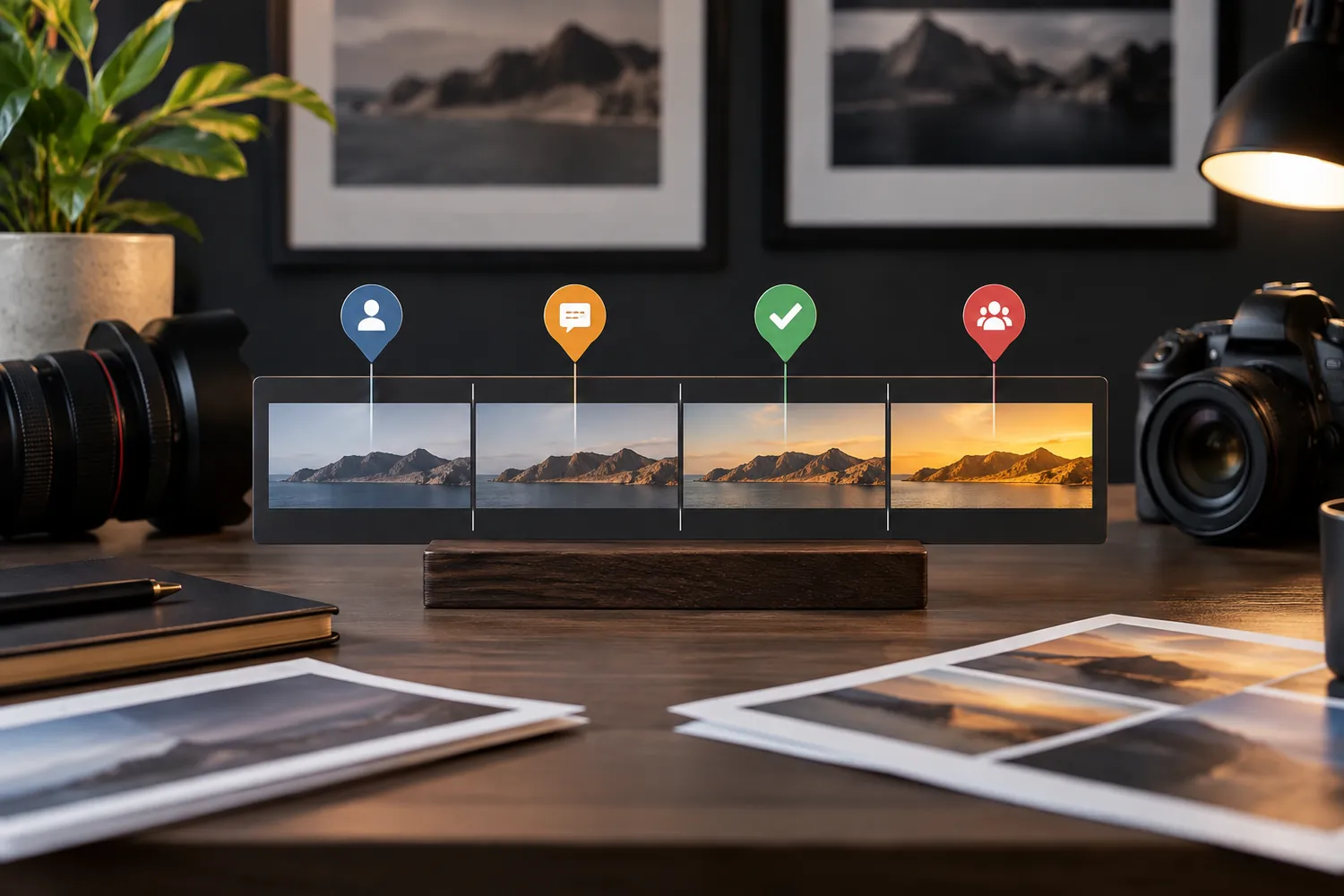
A client who sees a folder of a few hundred images assumes the hard part — the shoot — is done, and delivery is now a matter of exporting the files. The days between the shoot and delivery are rarely explained, which is why a realistic turnaround time so often reads as slow to someone who has not seen what happens inside it. It is worth naming where those days actually go.
Selection comes before any editing starts
Before a single image is retouched, every frame from the shoot has to be reviewed, compared against near-duplicates, and narrowed down to the set that will actually be delivered. A shoot that produces several hundred frames might yield a fraction of that as a final set, and choosing well takes real time — the difference between a merely correct image and the genuinely best one is often only visible when they sit side by side. Rushing this stage means editing time gets spent polishing a frame that was never the strongest choice in the first place.
Retouching is not one step
"Editing" covers several distinct passes that are easy to compress into a single mental step: removing genuine flaws — dust, stray hair, a distracting background element — comes first, followed by finer work specific to the subject, whether that is skin retouching for a portrait, surface consistency for a product shot, or removing a reflection that gives away the studio setup. Each pass is a separate decision, and doing them in the right order avoids redoing earlier work when a later pass reveals something the first pass missed.
Colour has to be consistent across the whole set, not just accurate on one image
A single image can look correct in isolation and still clash badly once it sits next to twenty others from the same shoot — skin tones that shift slightly frame to frame, a product colour that reads warmer in one shot than another. Bringing a full set into consistent, accurate colour is a separate pass from correcting any one image, and it is where a set stops looking like individually adjusted photos and starts looking like a coherent shoot.
Review rounds are part of the timeline, not outside it
A first set delivered for feedback is rarely the final set — a client asks for a different crop, flags a shot they'd prefer swapped, wants a colour adjustment on one image but not the rest. Each round of feedback needs its own time to implement properly, and a turnaround estimate that only counts the initial edit and ignores the rounds that follow is not really an honest estimate.
Why "just work faster" does not actually shorten it much
Compressing selection or colour consistency to hit a faster deadline usually shows up later as inconsistency across the set or a missed flaw that gets flagged in review — which then needs its own round to fix, often costing more total time than doing it properly the first time. A turnaround estimate that accounts for selection, layered retouching, full-set colour consistency and at least one review round is a plan a client can actually rely on, rather than an optimistic number that quietly slips once the real work starts.
Our production team builds turnaround estimates around all four stages up front, because the honest number is more useful to a client planning a launch than a fast one that arrives late.


