
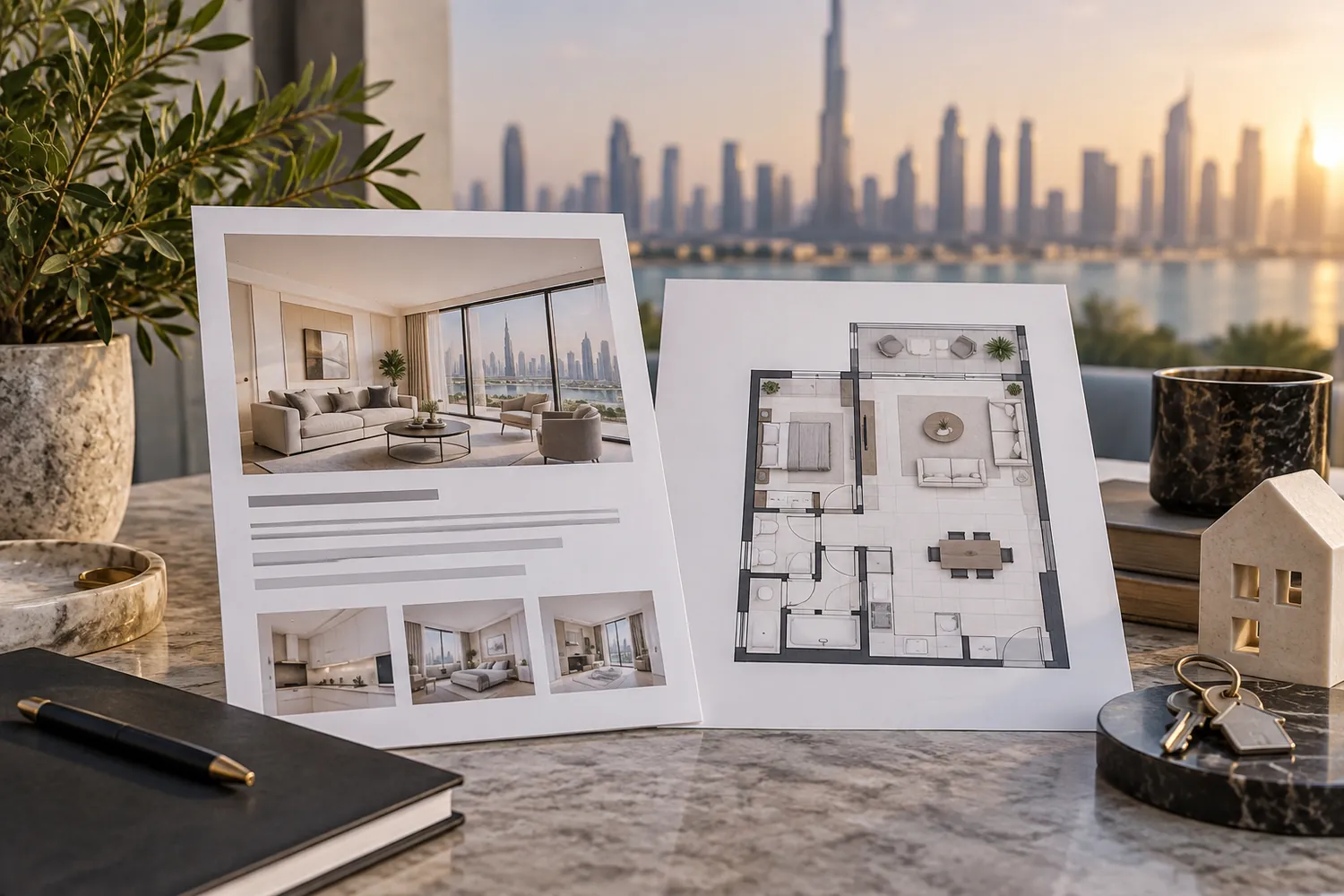
Most listing copy reads like the floor plan turned into sentences: bedroom count, bathroom count, square footage, a list of amenities in the building. None of that is wrong to include, but none of it is what actually moves a buyer from browsing to booking a viewing, because a buyer comparing several similar units already has the spec sheet in front of them on the portal. What the copy has to do is answer a different question — not "what does this unit contain" but "why would I choose to live here specifically."
The gap between features and the decision
A buyer is not deciding between numbers, they are deciding between mornings: which kitchen they'll actually cook in, which balcony they'll sit on, whether the commute from this specific building works for their actual routine. Listing copy that only recites features leaves the buyer to do that imagining themselves, from a spec sheet, which most people are not good at doing from numbers alone. Copy that does the imagining for them — grounded entirely in what is actually true about the unit — closes that gap.
Writing toward the life, without inventing anything
This is not about adding adjectives or claiming a lifestyle the property doesn't support. It is about describing real, specific, verifiable details in a way that lets a buyer picture using them: not "spacious living area" but a specific, true detail about how the light falls in it in the afternoon, if that is genuinely the case; not "close to everything" but the actual walk to whatever is genuinely nearby. Every sentence should be checkable against the unit itself. The moment copy describes something that isn't accurate — a view that's partially blocked, a room that's smaller than it photographs, a walk that's longer than implied — it creates a viewing that ends in disappointment and a buyer who now distrusts every other listing from the same agency.
Order matters as much as content
Open with whatever is genuinely most distinctive and true about the unit, not with the address or the unit number. Save the full spec list for below the fold, where it still needs to be complete and accurate — buyers do check it — but it is not what earns the first ten seconds of attention. The first two sentences are doing the work of getting someone who is scrolling past a dozen similar listings to actually stop on this one.
The line that should not be crossed
Any description that implies square footage, view, condition, tenure or included fittings beyond what is verifiably true should not appear, however much better it would read. Confirm the current listing-disclosure requirement with your broker's compliance team before publishing, since what has to be stated plainly rather than implied can vary and changes over time — good copy persuades honestly within those requirements, it does not work around them.
Why this connects back to the pipeline, not just the listing
A buyer who books a viewing based on accurate, vivid copy arrives already leaning toward the property, which converts to an offer at a noticeably higher rate than a viewing booked on a bare spec sheet, and it protects the reputation and referral relationships an agent depends on long after this one listing sells. Our marketing team writes listing copy this way — specific, checkable, built around the decision rather than the dimensions — because the units that get remembered are the ones described like somebody actually lived in them.


