
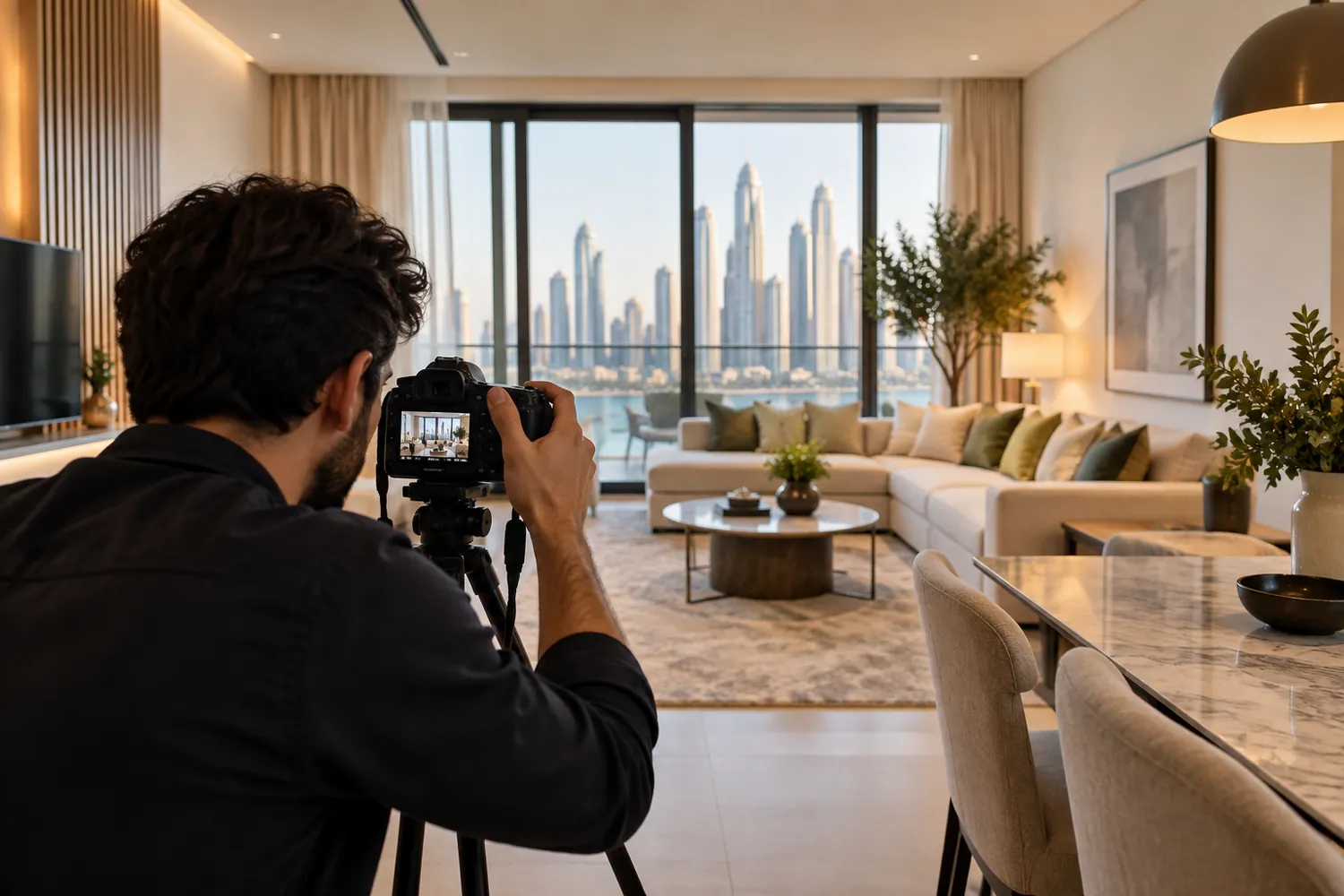
A buyer scrolling a portal spends a few seconds on each thumbnail before deciding whether to open the full listing. Those first three images are doing almost all of the work — not the twentieth photo of the second bathroom, not the caption, the first three. If they don't communicate what the property actually is and what makes it worth a closer look, most buyers move on before reaching photo four.
What the first image has to do
The cover photo has to answer, at a glance, the question a buyer is actually asking: is this the kind of place I'm looking for. That usually means the strongest, most representative room — not necessarily the largest, but the one that best shows the property's actual character — shot in a way that reads clearly as a thumbnail, not just as a full-size image. A photo that only looks good large is wasted as a cover, because most buyers never see it large; they see it as one tile among dozens.
Why order is a decision, not an afterthought
The second and third images should build a coherent first impression rather than jumping between unrelated rooms. A living area, then a connected space or the view, gives a buyer a sense of flow and scale before the listing becomes a checklist of individual rooms. Photo sets that open with a hallway, a utility room, or an oddly framed exterior shot are burning the highest-attention slots on the images least likely to make someone stop scrolling.
Light does more work than staging
A room shot in flat, artificial light photographs smaller and less inviting than the same room shot with natural light doing most of the work, regardless of furniture or staging. Scheduling a shoot around when a property actually gets good natural light, rather than whenever a slot is free, changes the first-three-image outcome more than almost any other single decision — it is the difference that shows up before a buyer has consciously noticed why one listing looks better than another.
Accuracy protects the viewing, not just the click
A wide-angle lens that makes a room look meaningfully larger than it is will get more clicks and fewer serious viewings, because a buyer who arrives to find the space smaller than the photos suggested has already mentally discounted the property, and often the agent, before the walkthrough starts. Photos that get the click and then also match what a buyer finds in person are the ones that turn into offers rather than wasted appointments — the goal is an accurate first impression, not just an appealing one. Confirm with your broker's compliance team what, if anything, needs to be disclosed about edited or wide-angle images for the specific listing before publishing.
Where this fits in the pipeline
Good photography does not replace a fast response to the enquiry it generates — it is what earns that enquiry in the first place, by being the reason a buyer chose to open this listing instead of the next one in the feed. Our photography team shoots and orders a set with the first three images treated as the actual decision point they are, not as three photos among forty interchangeable ones.


