
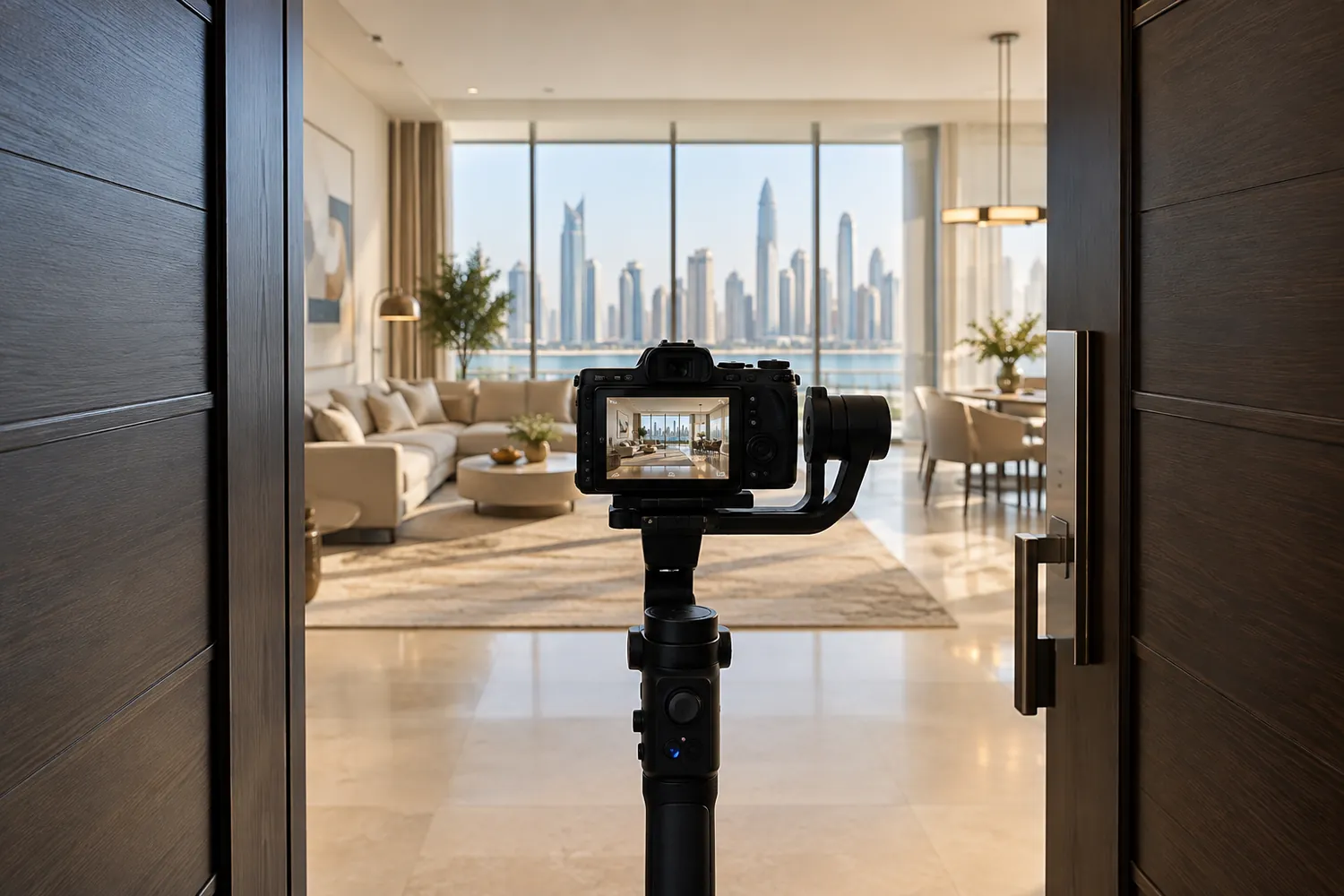
A lot of property videos are the photo set with motion added: a slow pan across the living room, a drift through the kitchen, a title card, music. It looks more polished than stills, but it answers exactly the same questions the photos already answered, just more slowly. For a local buyer who can walk through in person next week, that is a fine extra. For a buyer overseas who is deciding whether to fly in, book a viewing sight unseen, or pass entirely, it is not enough — the video needs to do work the photos structurally cannot.
What a photo gallery cannot show
Still images cannot convey scale the way movement through a space does, cannot show how one room connects to the next, cannot demonstrate what the light actually does across a day rather than at the one moment a photo was taken. A buyer trying to decide from another country is not just looking for more images; they are trying to answer "does this floor plan actually work the way I think it does" and "what does it feel like to move through this," which photographs, however good, leave to the imagination.
Building a tour around the questions a viewing would answer
A viewing exists to resolve doubts a listing can't: how loud is the road outside, does the layout feel as open as the floor plan suggests, is the building itself well kept beyond the unit. A tour built to replace that visit should move through the property in the order someone would actually walk it, hold on transitions long enough to convey scale, and include the building entrance, corridor and any shared spaces — the parts sellers often skip because they are less flattering, but which are exactly what a remote buyer cannot otherwise verify. Skipping them doesn't hide a weakness; it just means the buyer discovers it after arriving, not before booking.
What still belongs to an in-person viewing
A good tour reduces wasted viewings, it does not eliminate the value of a real one for a buyer who is genuinely close to deciding. Noise, smell, how neighbours sound through the walls, the actual feel of a space at the time of day someone would use it — none of this transmits through video. The honest goal is narrowing the field before travel or a booked slot, not replacing the final visit for a buyer who is already serious.
The practical difference this makes
A buyer who has watched a tour built this way arrives at an in-person viewing, or commits to an offer sight unseen, already confident about the things a rushed video would have left unclear — which shortens the sales cycle and reduces the number of viewings booked purely to answer a question the video should have answered. It is also, in its own right, a form of the first fast response an overseas buyer gets: a link sent within the hour that actually resolves their real questions does more than a promise to "send more information soon."
Our photography and video team builds tours around this brief specifically — the walk a genuine viewing would take, not a slower version of the gallery already on the listing.


