
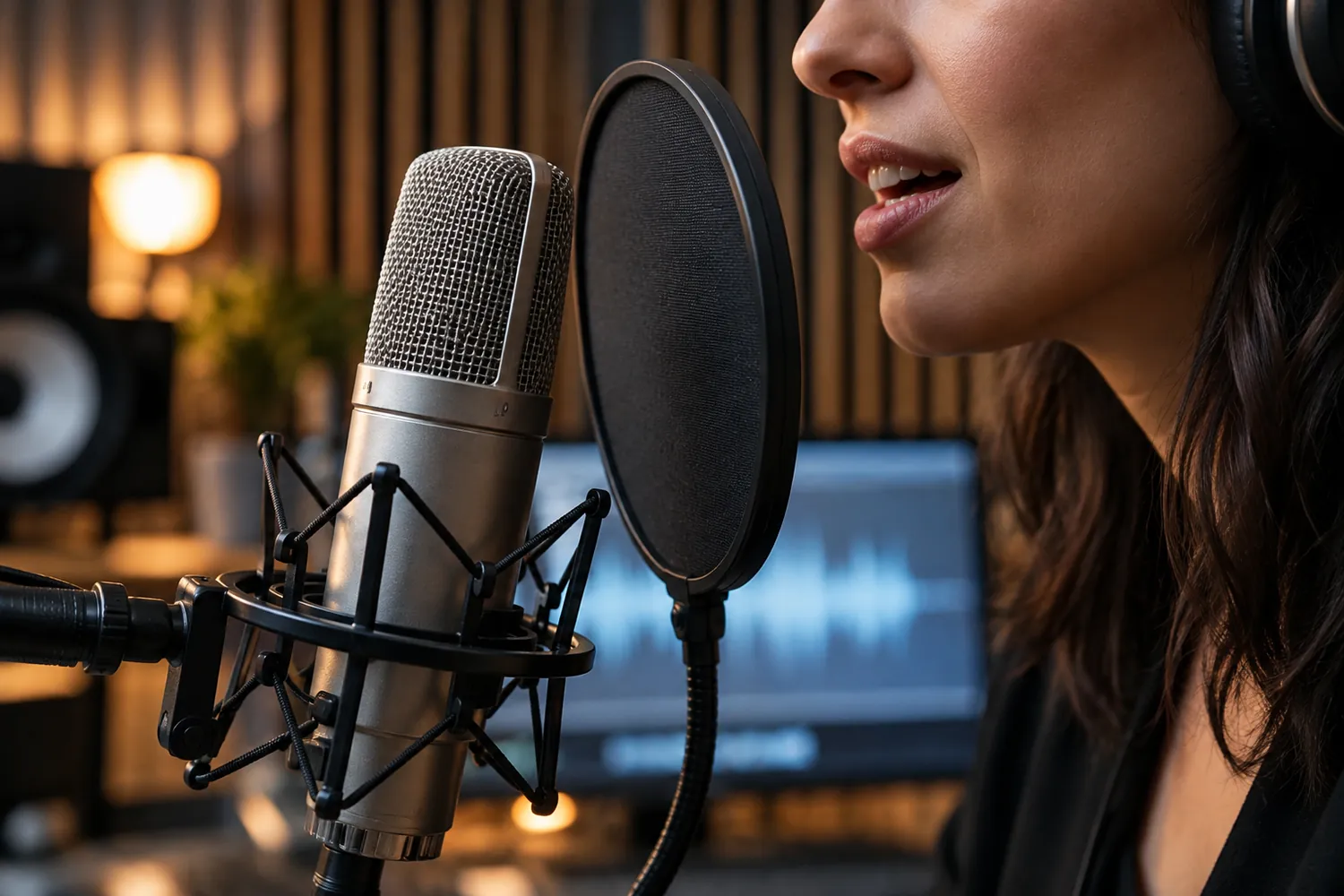
Ask someone why they stopped watching a video and they will usually blame the picture — it felt slow, the framing was off, the light was flat. Ask what actually made them click away and the honest answer is usually audio: a hiss under the voice, a room that echoes, a level that jumps between quiet and loud. Viewers are remarkably forgiving of a shot that is a little soft or a background that is a little cluttered. They are far less forgiving of sound they have to strain to understand, because strained listening is tiring in a way a slightly imperfect image is not.
Why audio gets less attention than it deserves
Most production budgets and most rehearsal time go toward what the camera sees, because that is the part everyone can evaluate by looking at a monitor. Audio is judged by ear, in the moment, and a small problem on set — a truck idling outside, an air conditioning unit, a lavalier mic brushing against fabric — is easy to miss when attention is on framing and performance. The mistake only becomes obvious in the edit, when it is far more expensive to fix, or in the final video, when the viewer notices before you do.
What actually goes wrong
Three problems account for most bad video audio. Distance is the biggest one: a camera-mounted microphone several feet from a speaker captures the room as much as the voice, which is why interviews shot on a built-in mic sound distant and hollow even when the image looks fine. Inconsistent levels are the second: dialogue that is comfortable in a quiet moment and either buried or clipping the instant the speaker gets animated. Room sound is the third: hard surfaces, tile, glass and bare walls all reflect sound back into the recording as echo, and no amount of editing fully removes it once it is baked into the file.
The fixes that matter most, in order of cost
Get the microphone close. A lavalier clipped to clothing or a shotgun mic positioned just out of frame captures a voice cleanly in almost any room, because proximity solves more problems than any amount of post-processing. This is the single highest-value change a shoot can make, and it costs nothing beyond planning for it.
Monitor with headphones during the shoot, not after. Watching levels on a screen tells you almost nothing about how a recording actually sounds. Someone on set listening through headphones catches the hum, the clipping and the passing traffic while there is still time to reposition, pause, or do another take — problems that are expensive or impossible to fix once the crew has left.
Treat the room, even minimally. A space does not need a soundproofed studio to sound acceptable. Soft furnishings, curtains, rugs and even moving a conversation away from a hard-walled corner measurably reduce echo. For a fixed location used repeatedly, simple acoustic panels pay for themselves quickly in editing time saved.
Record a few seconds of room tone. A short clip of silence in the actual location gives an editor a clean base layer to smooth transitions and mask small edits — a five-second habit that solves problems an editor would otherwise spend much longer trying to fix after the fact.
What this means for planning a shoot
Audio deserves the same pre-shoot planning as lighting and framing, not an afterthought handled by whatever microphone happens to be attached to the camera. Deciding on the microphone setup, checking the location for its natural echo, and assigning someone to monitor sound are all decisions that cost nothing to make in advance and are expensive to undo afterward.
Our production team treats audio as a planned part of every shoot rather than something fixed later, because a video with a slightly imperfect frame still holds attention — one a viewer cannot comfortably hear rarely does.


