
Most businesses want their first real AI project to be impressive: a new customer-facing feature, a clever product idea, something worth announcing. That instinct works against the odds. A flagship project usually automates a process nobody has touched before, has no established way to check whether the output is right, and carries a real cost if it goes wrong in public. The team running it is learning the tool, the workflow, and how to judge success all at once, and any one of the three can go sideways.
Why boring beats a flagship
A boring first project does the opposite. It targets something that happens often, has a right answer a person can check in seconds, and causes no real damage if the first few attempts are mediocre. Nobody remembers a quiet internal fix. Everyone remembers a public stumble, and a public stumble tends to end a company's appetite for trying AI again for a long time.
What boring looks like in practice
Tagging or routing inbound enquiries by type before a person picks them up. Drafting a first-pass reply to a question that arrives every week, for a human to edit before it is sent. Pulling structured data out of a form or an invoice into a spreadsheet. Summarising a long document before a meeting instead of reading it cold. None of these would make an interesting case study. All of them happen dozens of times a week, which is exactly the point.
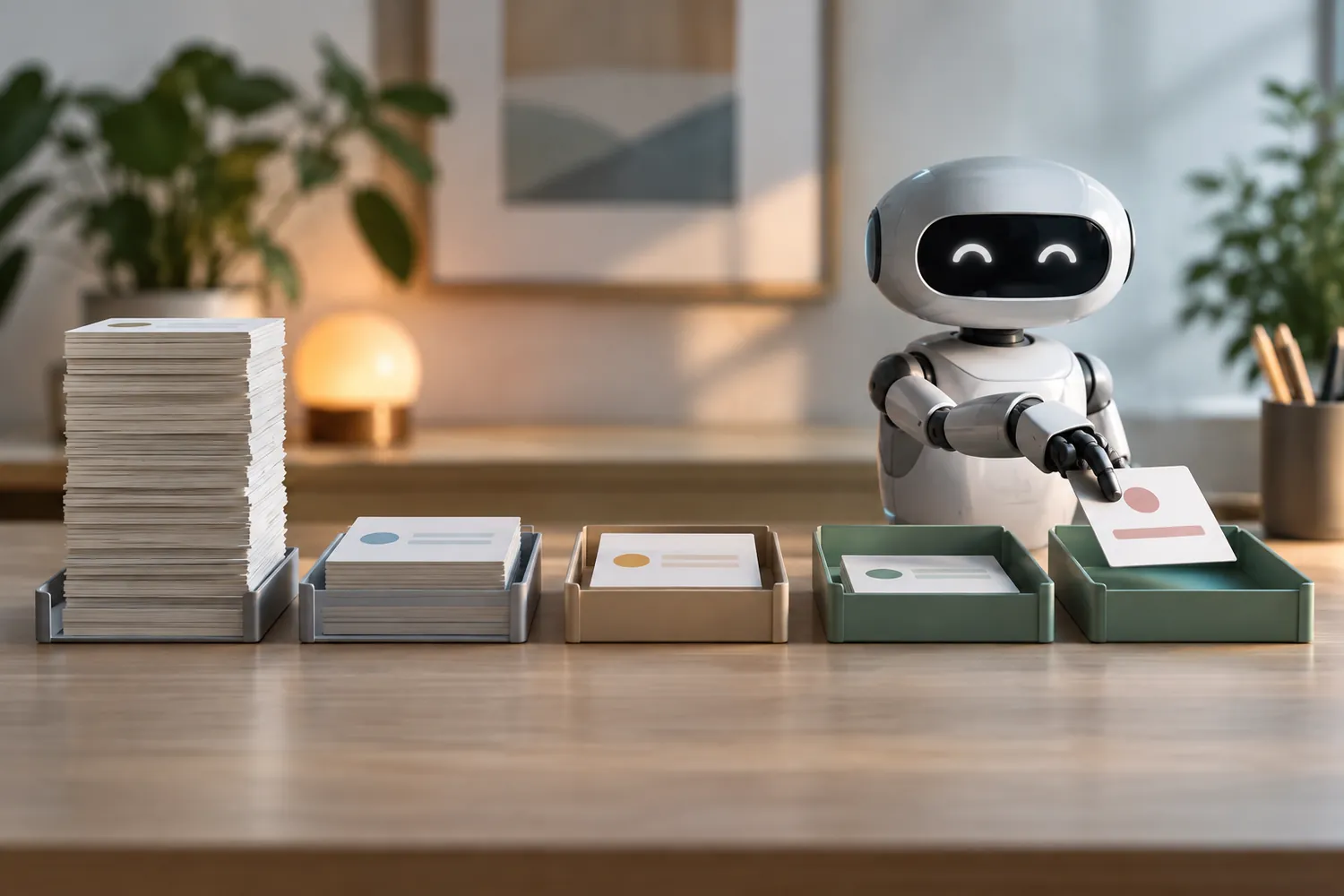
Picture, hypothetically, a small logistics company whose first AI project is sorting incoming email enquiries into three folders before anyone reads them. Nobody outside the business ever hears about it. The person who used to sort that inbox by hand notices the backlog is shorter, and that is the entire success story worth having at this stage.
The frequency advantage
A task that happens twice a month never produces enough attempts to tell whether a tool is actually working or you simply got lucky twice. A task that happens fifty times a month gives a real sample within weeks. Frequency, not glamour, is what lets a business tell the difference between a good result and a coincidence.
The cost of a public failure
An internal, low-stakes task that goes wrong gets noticed on the next attempt and quietly fixed. A customer-facing flagship that goes wrong is visible, and the appetite for a second AI project inside the business often shrinks along with it. Starting small protects the projects that are supposed to come after it.
Choosing the actual first project
List the repetitive tasks already happening in the business and score each one on two things: how often it happens, and how cheap a wrong answer is to catch and correct. The task that scores well on both is the one to start with, not the one that would look most impressive in a meeting. Once that first, unglamorous project is running and someone trusts the pattern of where it works and where it still needs a human, that judgment carries directly into the next, slightly more ambitious one.
where AI actually helps a small business lays out the wider map this fits into. Our team usually starts new clients on the dullest task on their list rather than the most exciting one, because it is the fastest way to find out what the second project should be.


