
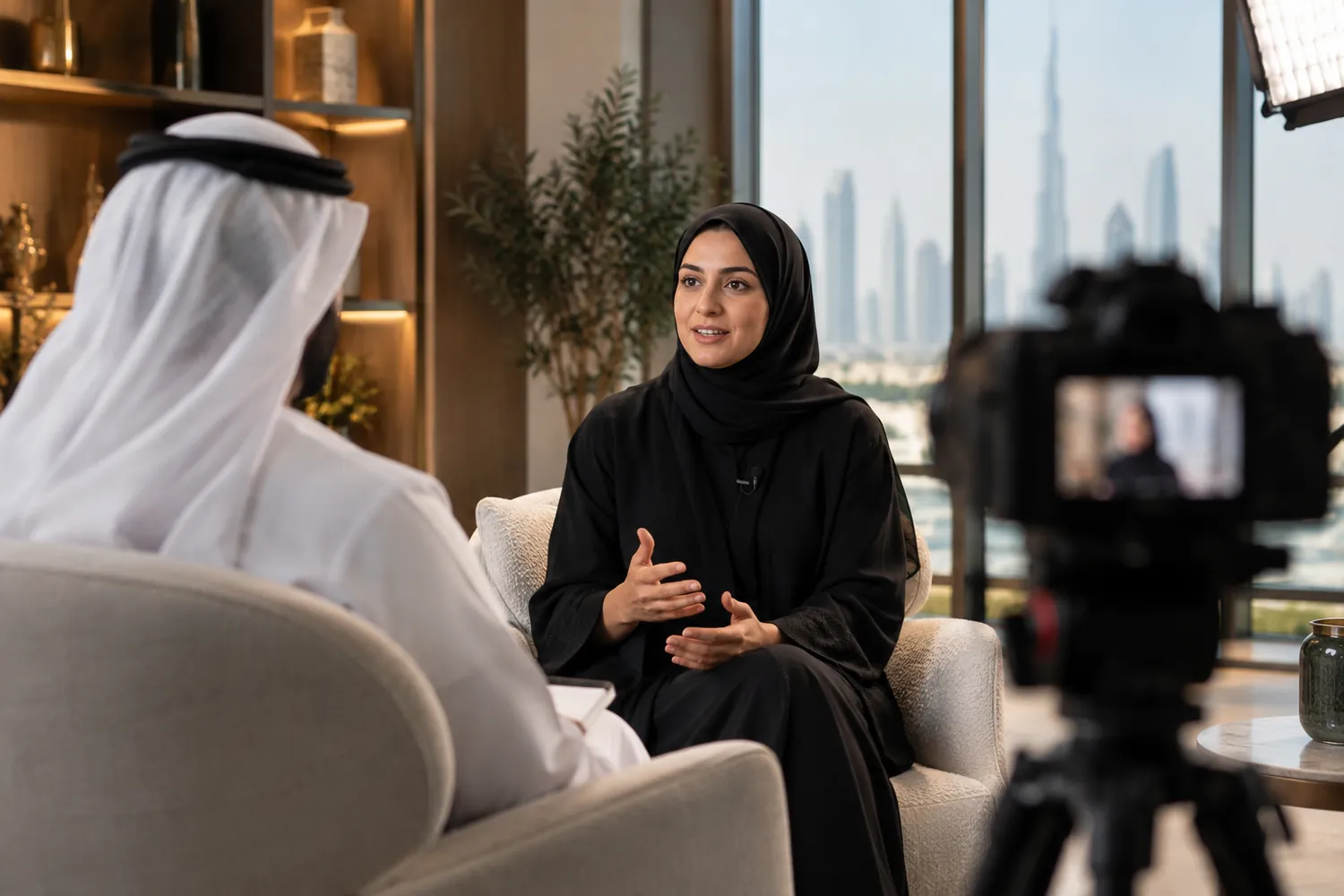
Most on-camera interviews go the same way: twenty minutes of footage, one usable line, and a client wondering why the video looks flat when the conversation felt great in the room. The gap is rarely the subject's charisma or the camera. It is that almost nobody designs an interview to be edited before they film it — they design it to be a good conversation, and a good conversation is not the same thing as a good source clip.
Ask the question inside the answer
A subject who answers "how long have you been doing this" with "fifteen years" gives you a number you cannot use on its own — cut into a sequence, it needs the question stitched back in as a voiceover or caption, which most brands don't budget for. Ask instead for the answer to restate the question: "Tell me how long you've been doing this, in a full sentence." A trained interviewer builds every question this way, because the edit only works if each answer can stand alone once your question is removed from the timeline entirely.
Write questions for the edit, not the conversation
Open with a genuine warm-up question you will never use — it settles the subject and gives you a baseline of their normal speaking rhythm. Then move through a small number of questions, each aimed at one specific clip you actually need, rather than a long list that produces a long, unfocused answer to each. If you need three separate ten-second clips for three different parts of a video, ask three separate, narrow questions rather than one broad question and hoping to find three moments buried inside it. Broad questions produce broad, unusable answers far more often than they produce a gift of unexpected specificity.
The room matters more than the questions
Eye-line, not eye contact with the lens, is what makes an interview feel natural on screen — most subjects should look at the interviewer standing just beside the camera, not into the lens itself, unless the format specifically calls for direct address. Background noise a subject has tuned out — an air conditioning unit, a nearby corridor, a ticking clock — is exactly what a microphone picks up first and what makes footage unusable regardless of how good the answer was. A five-minute room check before recording, listening with headphones rather than just looking with your eyes, catches more unusable footage than any amount of question design.
Let silence do its job
The instinct to fill a pause after a subject finishes speaking is the single habit that damages the most footage, because it trains the subject to rush their own answers to avoid dead air, and it removes the natural pause an editor needs to cut cleanly into and out of a clip. Waiting two full seconds after an answer ends, saying nothing, often produces a better, more considered follow-up sentence than the original answer — and if it doesn't, you've lost nothing but two seconds of footage you were never going to use anyway.
What this changes at the edit
An interview shot this way arrives at the edit as a set of complete, self-contained statements rather than a transcript that needs surgery to extract anything usable. That difference is most of what separates a video that gets finished on schedule from one that stalls because the editor is trying to build a coherent story out of fragments that were never designed to stand alone.
Interviews are one piece of the wider discipline behind getting a full quarter of content out of a single shoot day — the habits that make one afternoon of filming worth editing for months, rather than once.
Our production team plans interview questions around the edit before a single light goes up, so the footage you get is footage you can actually use.


