
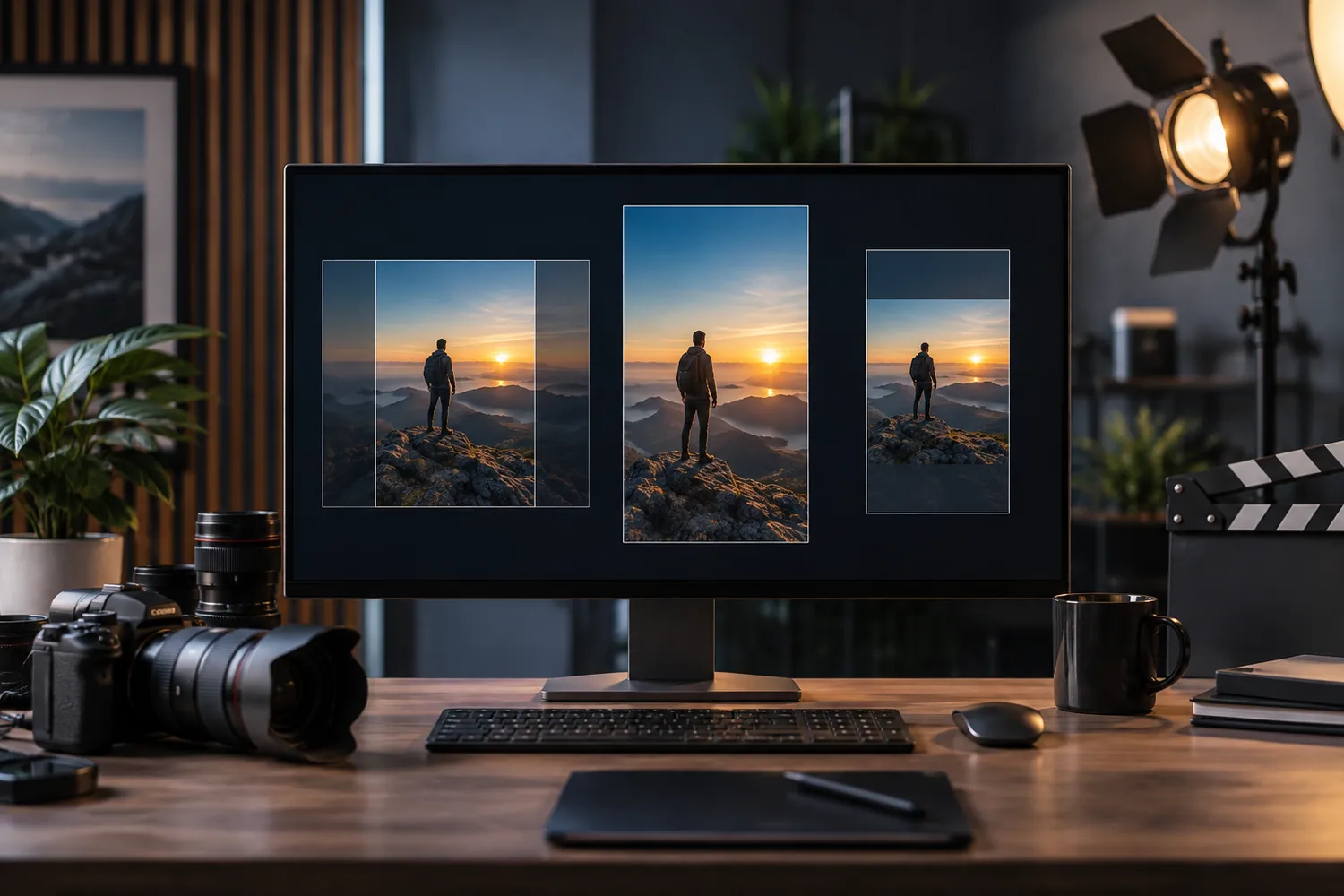
The default way to solve the vertical-square-wide problem is to shoot once in the widest ratio and crop down for everything else afterward. It technically produces three files, but usually only one that looks properly composed — the other two show whatever happened to survive the crop, not what anyone deliberately framed.
Why cropping after the fact rarely works
When a shot is composed for a wide 16:9 frame, the subject is usually placed with room on both sides, background detail spread across the full width, sometimes a second person or object balancing the composition. Cropping that same frame down to a 9:16 vertical usually removes one of those elements entirely, or leaves the subject uncomfortably close to an edge — not because the vertical crop is a lesser format, but because nobody framed the original shot to survive being cropped into it.
Plan the safe areas before the shoot, not after
A safe-area grid marks, for every aspect ratio the shoot needs to serve, where the essential subject has to sit so nothing critical falls outside any of the crops. In practice this usually means keeping the main subject closer to center than a horizontal-only composition would ask for, leaving generous headroom for a vertical crop, and treating the far left and right edges of the wide frame as expendable rather than essential. This is not complicated to plan, but it has to happen before the camera rolls — a director watching only the wide monitor on set has no way to notice that a vertical crop is clipping someone's shoulder.
What changes practically on the day
Frame slightly wider than the final wide shot needs to be, so there is margin to reposition for the square and vertical crops without losing resolution. Keep the subject's eyeline and the main point of interest inside the narrowest planned crop, even while shooting the widest version — treat vertical as the limiting ratio the whole frame has to respect, not an afterthought handled later. Shoot a genuinely separate vertical take when the action calls for it — a walking shot or a two-person conversation often needs its own blocking to read as intentional in vertical rather than as a rescued fragment of the wide take.
What still has to be handled separately
Text and graphic overlays are the one part a safe-area grid cannot solve through framing alone. A caption comfortably placed in the lower third of a wide frame will collide with a platform's own interface — comment counts, captions, share icons — once the same footage is cropped to vertical. These overlays need their own pass per ratio rather than being baked into the original footage, which is also a reason the shot list should flag in advance which frames are meant to carry text at all.
Three formats that do not look salvaged
Someone scrolling a vertical feed can usually tell within a second when they are looking at a horizontal shot forced into a vertical frame — the composition feels wrong before they could explain why. Deciding the safe areas before the shoot is what lets the vertical, square and wide versions each look built for their own platform, drawn from a single production day planned for reuse instead of three separately briefed shoots.
Our production team plans the safe-area grid alongside the shot list itself, so the crop is decided before the framing rather than after it.


