
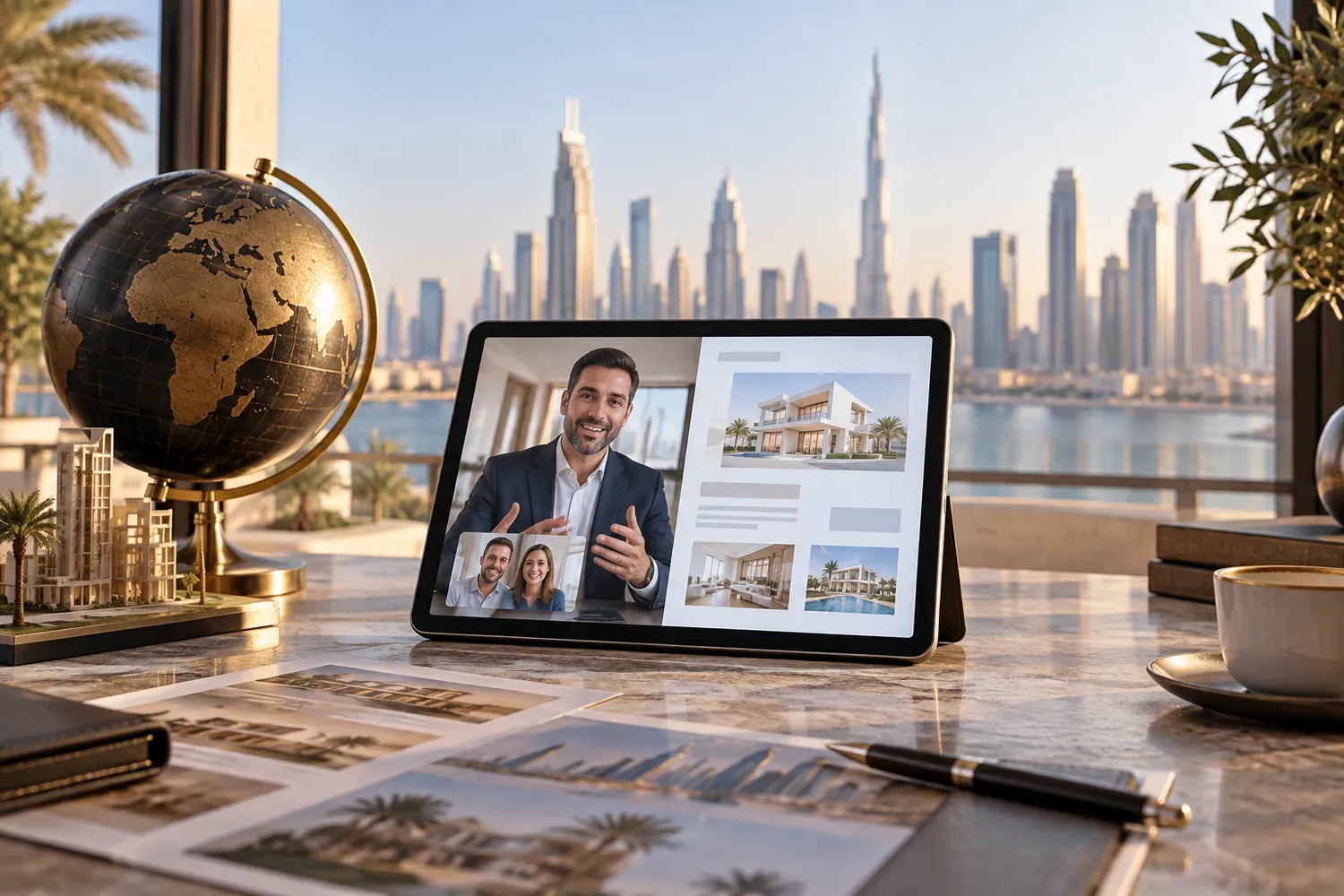
Most property marketing assumes the buyer will eventually stand in the unit before they commit. An overseas buyer often does not — the deposit gets paid, sometimes the full purchase, from a screen a long flight away from the building, and every piece of trust a physical viewing would normally establish has to be built some other way.
The trust gap a viewing usually closes
A buyer walking through a finished unit resolves a dozen small doubts without anyone having to address them directly — the finish quality, the noise level, the neighbourhood, whether the listing photos were honest. An overseas buyer resolves none of that by walking through anything. The campaign has to answer those doubts before they are asked: detailed video walkthroughs rather than a handful of stills, honest footage of the surrounding area and not only the unit, and a level of documentation most local campaigns never bother producing because a viewing would have made it redundant.
Time zones decide whether the enquiry survives
An enquiry from a buyer eight or ten hours away does not wait for the sales desk's normal working hours — by the time a same-day-tomorrow response arrives, interest has often already cooled or moved to a competing development that answered faster. A response plan built around the buyer's time zone rather than the seller's, even something as simple as a scheduled video call slot that respects both calendars, changes which enquiries actually convert.
Documentation has to do the work a handshake would
An overseas buyer is often navigating a legal and financial system they have never dealt with before, in a currency and sometimes a language that is not their own. Where a local buyer might tolerate an informal explanation of the payment schedule or the registration process, a remote buyer needs it written down, in their own language, and easy to hand to their own lawyer for a second opinion. The specific documents required and the process a buyer must follow vary by jurisdiction and change over time, so it is worth confirming the current listing-disclosure and registration requirements with your broker's compliance team rather than assuming last year's process still applies.
Currency and payment clarity
A price shown only in the local currency asks a foreign buyer to do a mental conversion every time they look at it, and to absorb currency-movement risk they may not have priced in. Showing the figure in the buyer's likely home currency alongside the local one, and being explicit about which currency the actual payment schedule is denominated in, removes a source of confusion that has nothing to do with whether the unit itself is right for them.
Building the remote relationship the visit would have built
What actually closes a remote sale is rarely a single polished video — it is a sequence of contact that substitutes, piece by piece, for what an in-person visit would have provided: a live video call where a real person walks the buyer through the unit and answers questions in real time, references from other overseas buyers who have already completed, and a single point of contact who stays consistent through the whole process rather than a different name at every stage. Our marketing team builds that sequence deliberately for developments with meaningful overseas demand, because a buyer who never visits first is not a buyer who needs less reassurance — they need it delivered differently. For where this fits inside the wider campaign, see our guide to marketing an off-plan development.


