
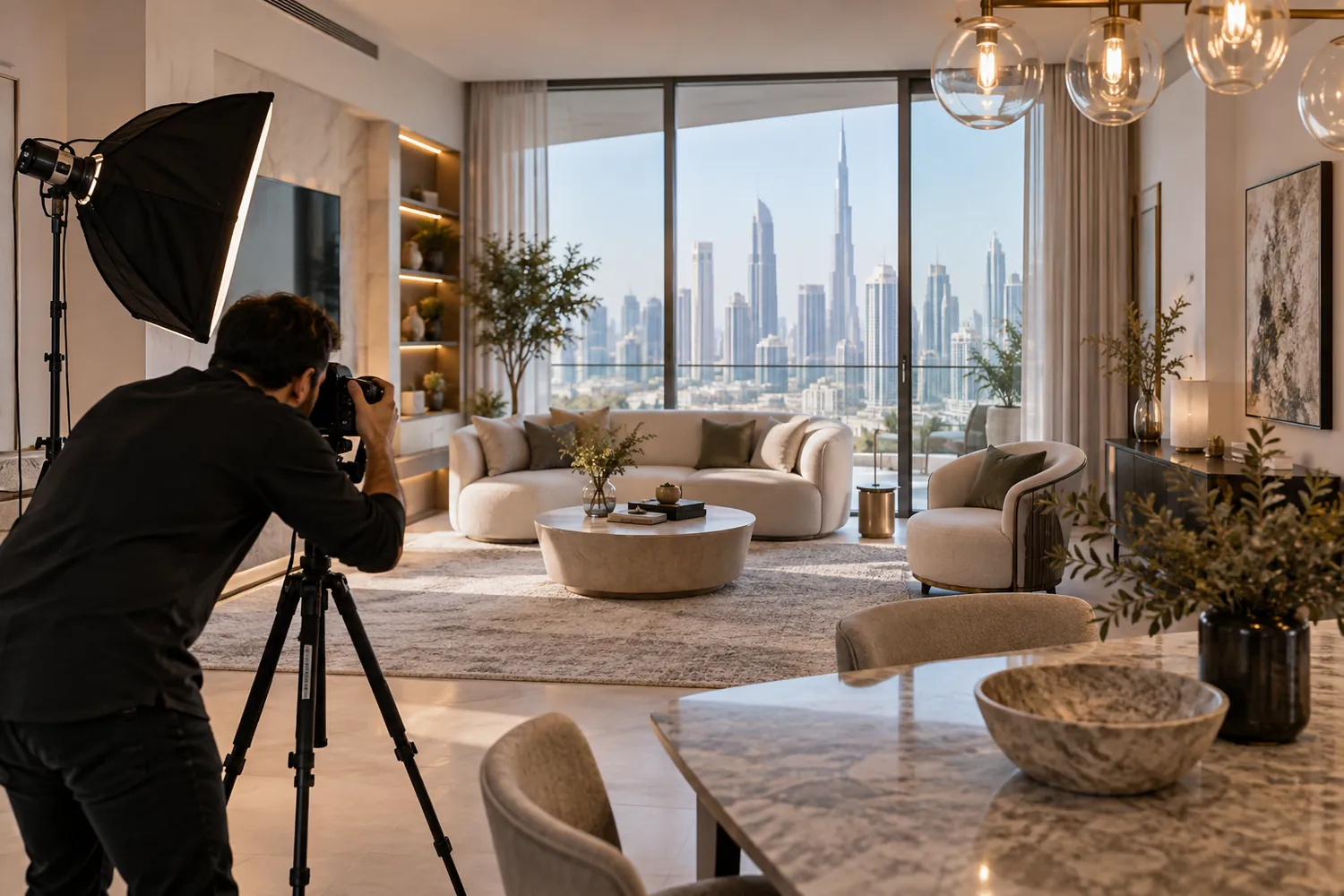
A show apartment usually costs more per square metre to build and dress than any unit the developer will actually sell inside it, because it is not a home — it is a piece of marketing equipment shaped like one. Treating it that way, deliberately, is what gets the spend back.
The most expensive prop most developers will ever build
Furniture chosen for a show apartment is selected for how it reads in photographs, not for how it lives day to day; staging accessories, layered lighting, sometimes a scent or a soundtrack for a physical viewing. All of that is sunk cost the moment the unit is dressed for the first buyer walkthrough or first press day. The only way to earn it back is to extract as much use from the space as the schedule allows, for as long as it exists in that state.
Treat the shoot as a campaign, not a single session
A single hero shoot on opening day produces a handful of images that get reused until they look dated. A show apartment scheduled properly produces months of material: different times of day for the same rooms, seasonal variation if the unit stays dressed that long, close details of the finishes separate from the wide lifestyle shots, video walkthroughs cut for different lengths and platforms, and still photography specifically built for print collateral that a wide social image was never composed for. Booking one long shoot day, or several shorter ones spaced across the sales period, produces a library rather than a single set of assets the sales team exhausts in the first month.
What else the room can do besides get photographed
The show apartment is also the best sales tool the developer has, and it earns its cost fastest when it is used for more than photography: private previews for agents before public launch, small buyer events timed to sales milestones, a venue for one-on-one conversations that close deals a brochure cannot close on its own. A room this expensive that only gets used for photography and the occasional walk-in viewing is underused relative to what it cost to build.
Booking the shoot before the unit is dressed, not after
The photography and the dressing are often booked by different people on different timelines, and the gap between them is where most of the best opportunities get lost. A styling company usually needs lead time to source furniture that fits the unit's actual dimensions, and a photographer needs the unit finished, cleaned and dressed — not mid-installation — to get anything usable. Booking the shoot date before the dressing is confirmed, rather than after, forces both suppliers to work back from the same deadline instead of each assuming the other has room to slip. A show apartment that opens a week late because the shoot was booked around the dressing schedule, rather than the other way round, has already lost the days when the light or the season was right for the hero images the campaign needed most.
Keeping the asset current
A show apartment dressed once and left untouched for the length of a long sales period starts to look tired in new content well before the building itself does — cushions fade, styling trends move on, and photography taken in month one of an eighteen-month sales run can start working against the campaign rather than for it. A light refresh partway through the sales period, even a modest one, keeps the photography current with what a buyer will actually see on a viewing today.
What eventually happens to the unit itself
Every show apartment ends its life as a marketing asset the same way: it gets sold, usually last, once its job is done. Planning for that from the start — knowing roughly when the dressing needs to come down and the unit needs to revert to a sellable, undressed state — avoids the awkward final stretch where a developer is trying to sell the one unit still full of furniture nobody is buying with it. Our photography team plans the shoot calendar around that end date from the outset, rather than treating the unit as though it will stay dressed indefinitely. The show apartment earns its keep across the whole campaign it sits inside — see our wider guide to marketing an off-plan development — not only at the moment it opens its doors.


