
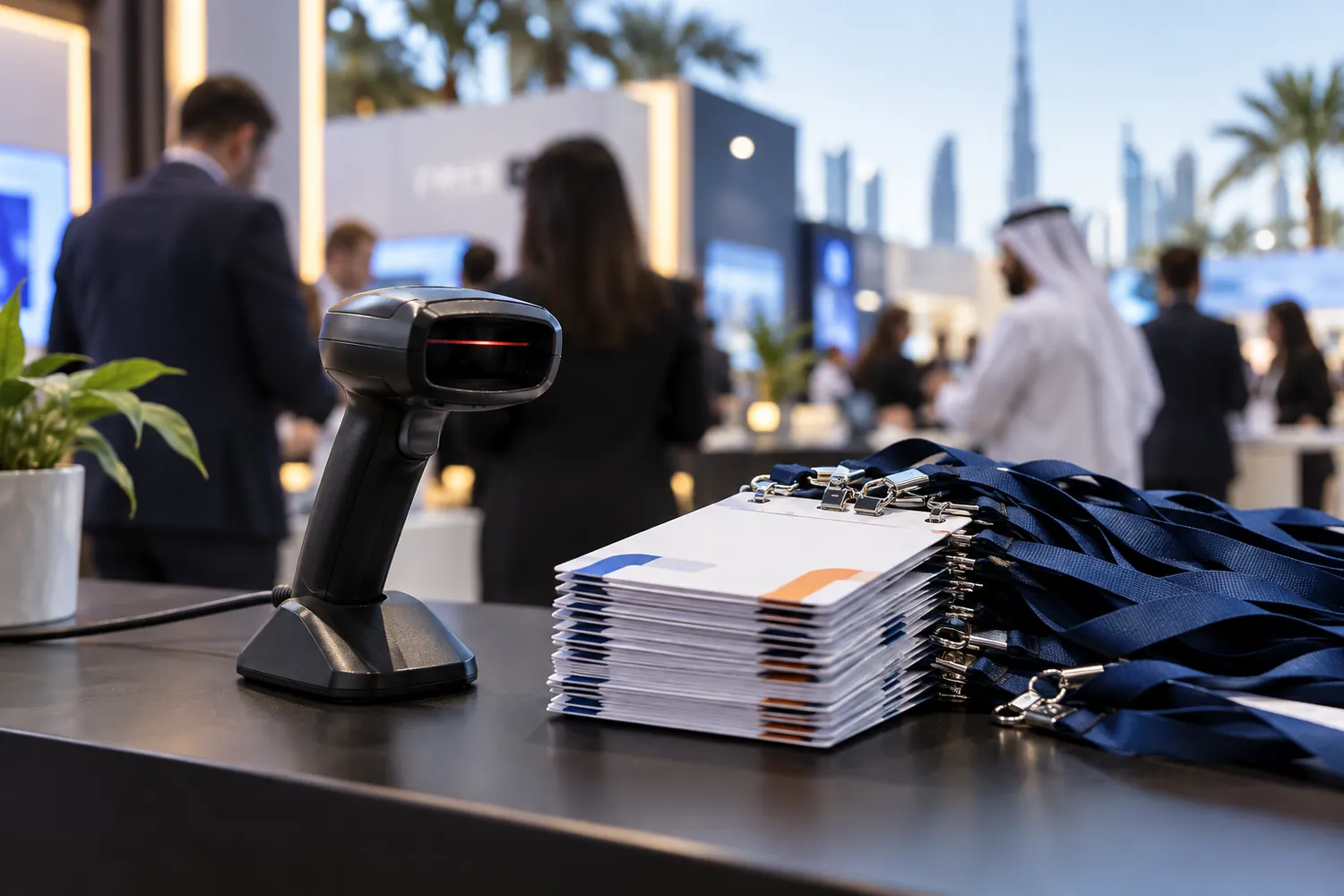
A scanner at a trade show booth produces a number that feels like a result on its own: three hundred badges scanned, a strong showing compared to last year. The number means nothing until someone is contacted, and on most stands nobody has actually decided who does that, by when, or with what message. The badge export sits in an inbox until the excitement of the show has faded from everyone involved, including the person who was scanned.
The gap that kills most trade show ROI
The failure point is rarely the booth, the staffing, or the giveaway. It is the week after, when the export lands as a spreadsheet with a scan timestamp and a job title, and no note about what was actually discussed. A scan alone cannot tell a salesperson whether the person asked a specific question, picked up literature out of politeness, or is already a customer of a competitor. Without that context, the follow-up becomes a generic email sent to everyone on the list at once, arriving long after the conversation that would have made it relevant.
Tagging at the point of contact, not after
The fix has to happen at the booth, not in the office. Every scan should be tagged in the moment with one of a small number of categories — genuinely interested and asked for a proposal, curious but not a fit, competitor or student, giveaway only — because a staff member who just spoke to someone remembers the conversation for about an hour, not for the three weeks it typically takes to work through a full export. A tagging system with five categories, agreed before the show opens, turns an undifferentiated pile of scans into a prioritised list the moment the booth closes.
Speed matters more than polish
A short, specific message sent within forty-eight hours of the show outperforms a longer, more polished one sent two weeks later, because the prospect still remembers the booth, the conversation and the reason they stopped. By the third week, that context has usually evaporated and the email reads as an unsolicited pitch from a company the recipient can barely place. The message itself does not need to be elaborate — referencing the specific thing discussed at the booth does more work than a generic "great meeting you" template ever will.
Building the plan before the event, not during it
The follow-up plan should exist as a document before the first badge is scanned: who owns the export on day one after the show, what the tagging categories are, what each tier receives and on what timeline, and who is accountable if leads sit untouched. Without this agreed in advance, the default outcome is that everyone assumes someone else is handling it, and the export ages in an inbox until it is effectively worthless. This is a coordination problem more than a technology problem, though the right system removes a lot of the friction that coordination otherwise depends on.
Where a CRM actually earns its cost
A proper CRM connected to the scanner data changes the economics of this entirely: tags applied at the booth flow straight into a pipeline stage, a follow-up sequence starts automatically for each tier, and a sales manager can see the same day whether the hottest leads have actually been touched rather than discovering three weeks later that they were not. Without a system like this, the discipline required to work an export by hand, consistently, across every show a business attends, rarely survives past the first event where the team is busy with something else. Our software team builds the CRM workflows that make this automatic rather than dependent on someone remembering to open a spreadsheet.
Getting this right does not require a bigger booth or a better giveaway. It requires deciding, before the room fills, what happens to every single badge that gets scanned — because the show itself was only ever the first half of the job.


