
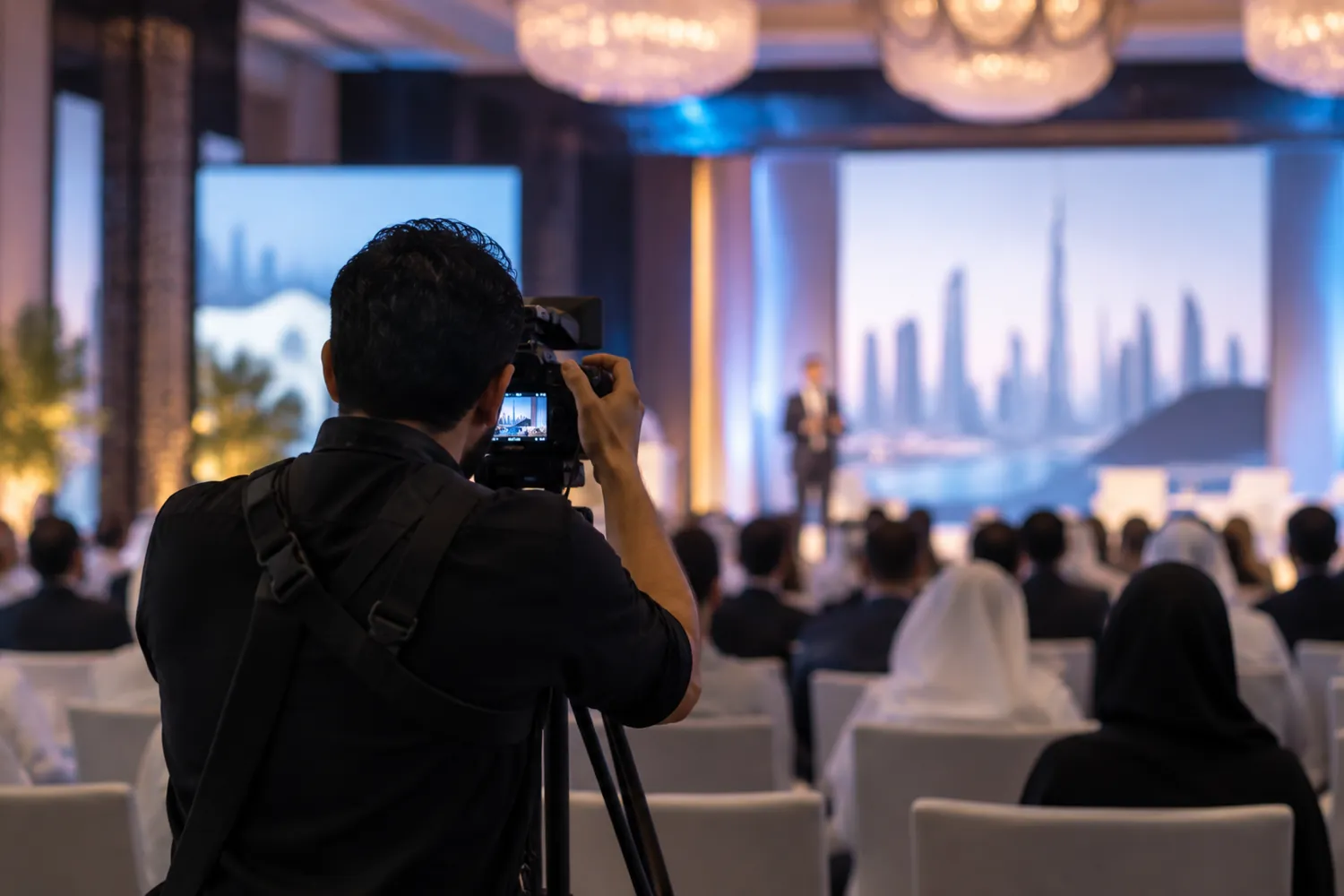
An organiser who spends the event checking timing, greeting sponsors and putting out small fires does not also have the attention left to notice the moment worth photographing across the room. Grabbing a phone between tasks produces a handful of usable frames at best, and the event that most needed documenting — because it is the one being used to sell next year's edition — ends up with the thinnest visual record of any of them. Covering an event properly is a separate job from running it, and treating it as something squeezed in between other responsibilities is how both jobs suffer.
Why the organiser cannot also be the photographer
The reasoning usually goes: someone on the team is decent with a camera, the budget is tight, and hiring a photographer feels like an easy line to cut. What gets missed is that the organiser's attention during the event is already fully committed to things a photographer cannot see from behind a lens — whether the schedule is slipping, whether a speaker needs water, whether a sponsor looks unhappy. Splitting that attention with a camera does not produce good photography and good event management at once; it produces a distracted version of both.
Sizing the crew to what the event actually needs
A small workshop or a single-room talk can usually be covered by one photographer moving quietly around the room, catching the speaker, the audience reaction and a handful of candid moments. A larger conference with concurrent sessions, a stage, an exhibition area and a networking reception needs more than one set of eyes, because no single photographer can be in the keynote and the sponsor lounge and the registration desk at the same time. Matching crew size to the event's actual footprint — not to what the budget happens to allow — is what determines whether the photos tell the whole story or just the story of wherever one person happened to be standing.
Shooting for next year's promotion, not just this year's memory
The photos that get used are rarely the formal stage shots everyone assumes matter most. A full registration desk at opening time, the room genuinely filling up, a crowd reacting to something on stage, a sponsor's branding shown naturally in context rather than staged, and the informal moments during breaks that show what the room actually felt like — these are the images that do real work in next year's promotion, because they show a stranger what attending would feel like rather than just proving the event happened.
A shot list beats hoping the photographer already knows
A photographer who has never been to this event cannot guess which sponsor logo absolutely must appear cleanly in at least one usable frame, or which speaker's moment matters most to the organiser. A short list handed over before doors open — the handful of shots that are non-negotiable, the people who must be photographed together, the sponsor visibility that was promised in a contract — removes the guesswork and protects against finding out after the event that the one shot everyone needed was never taken.
Good coverage feeds directly back into the promotion that fills next year's room — an event without a real photo library has nothing convincing to show the next audience it is trying to reach. Our photography team plans crew size and shot lists around what the footage actually needs to do afterward, not just what looks good on the day.


