
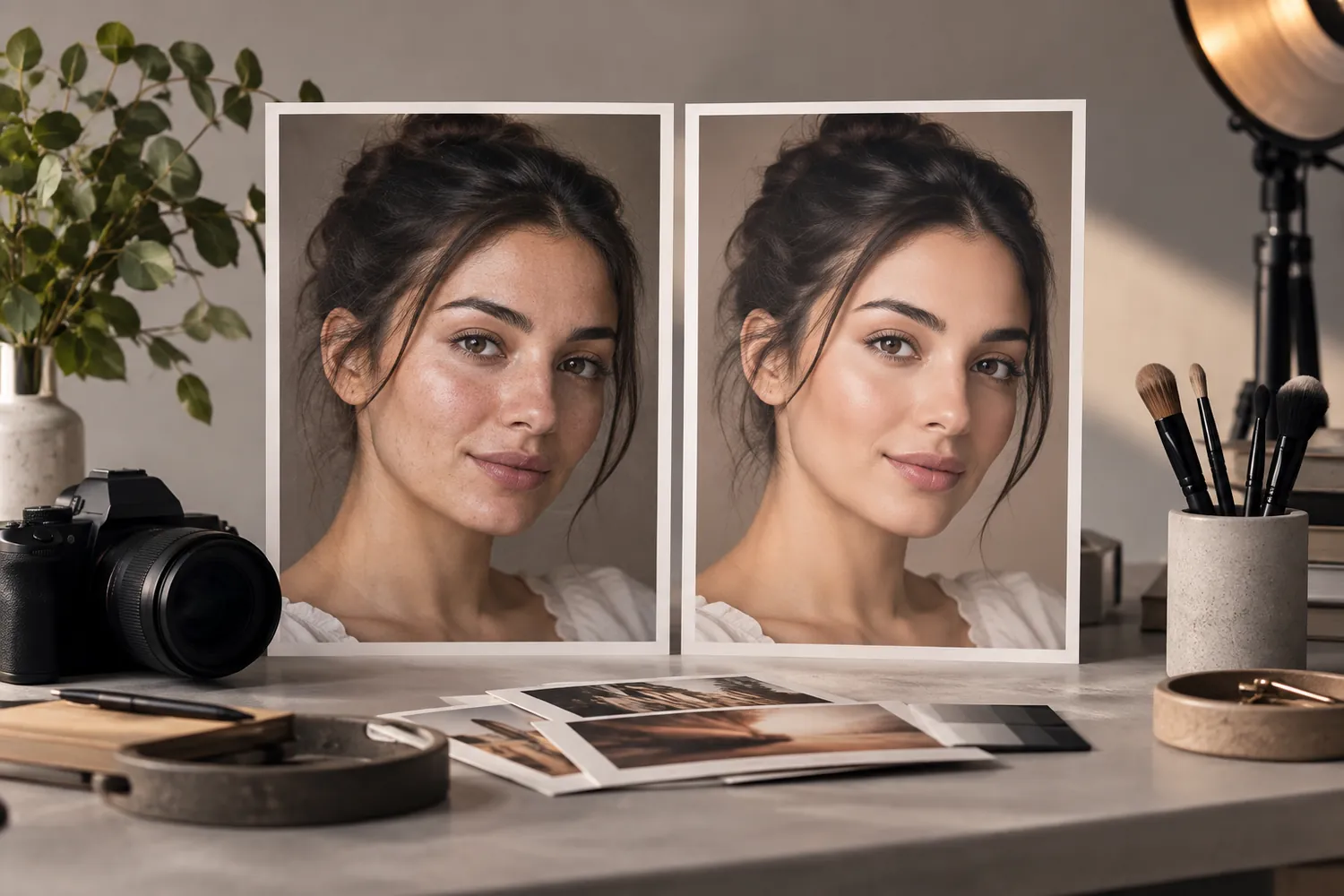
Every image that leaves a shoot has already been altered in some way — colour corrected, cropped, cleaned of dust and stray hair — and almost nobody objects to that. The disagreement starts further along the same spectrum, at the point where an edit stops representing what was actually there and starts representing something that was not. Setting a clear internal standard for where that point is matters more than any single retouching decision, because it is the standard that keeps every future decision consistent.
Why "just make it look good" is not a usable rule
Left as a vague instruction, "make it look good" gets interpreted differently by every retoucher and drifts further with every project, because there is no fixed reference to check a decision against. A usable standard needs to say, specifically, what can be corrected freely, what needs a judgment call flagged to the client, and what should not be altered at all — written down once, rather than re-litigated on every shoot.
Correction versus alteration
Some edits are simply correcting for what the camera and lighting could not capture perfectly: a colour cast from mixed lighting, minor sensor dust, blemishes that were genuinely temporary and unrelated to what is actually being sold or represented. These are corrections, and few people would call them dishonest.
Alteration is different: reshaping a product to look larger or a different colour than what a customer will actually receive, smoothing a texture that is itself a selling point, or changing a person's body shape in a way that misrepresents what they actually look like. The test that holds up better than most others is simple to state, even if applying it takes judgment: would the subject look meaningfully different in person than they do in the image? If yes, the edit has likely crossed from correction into alteration.
Product photography carries its own version of this problem
For anything a customer will judge by its photograph before deciding to buy, colour and scale accuracy is not a stylistic choice — it is close to a promise. A retouched product shot that reads noticeably different from the item on delivery creates a mismatch that shows up later as returns and complaints, not just as a design complaint. The standard here should be stricter than for a purely creative or editorial image, because the image is doing commercial work that a viewer will act on directly.
Portraits deserve their own explicit line
Where a person is the subject, the standard matters most, because the person photographed has to recognise themselves in the result and live with how it represents them. A house standard that names, specifically, what kind of retouching is acceptable — removing a temporary blemish, evening out lighting — and what is not — reshaping a body, changing a fundamental feature — gives a retoucher a clear boundary instead of a case-by-case guess, and gives the subject a reasonable expectation of what they will see.
Writing the standard down once
The value of a documented standard is that it removes the pressure of deciding in the moment, image by image, under a deadline. A short, written guide — a few examples of acceptable and unacceptable edits, side by side — settles most future questions before they come up, and gives a retoucher something concrete to point to rather than a personal judgment call every time.
Our production team works from a documented retouching standard rather than a case-by-case instinct, because the line between polished and dishonest only holds if it is drawn once, clearly, and applied the same way every time.


