
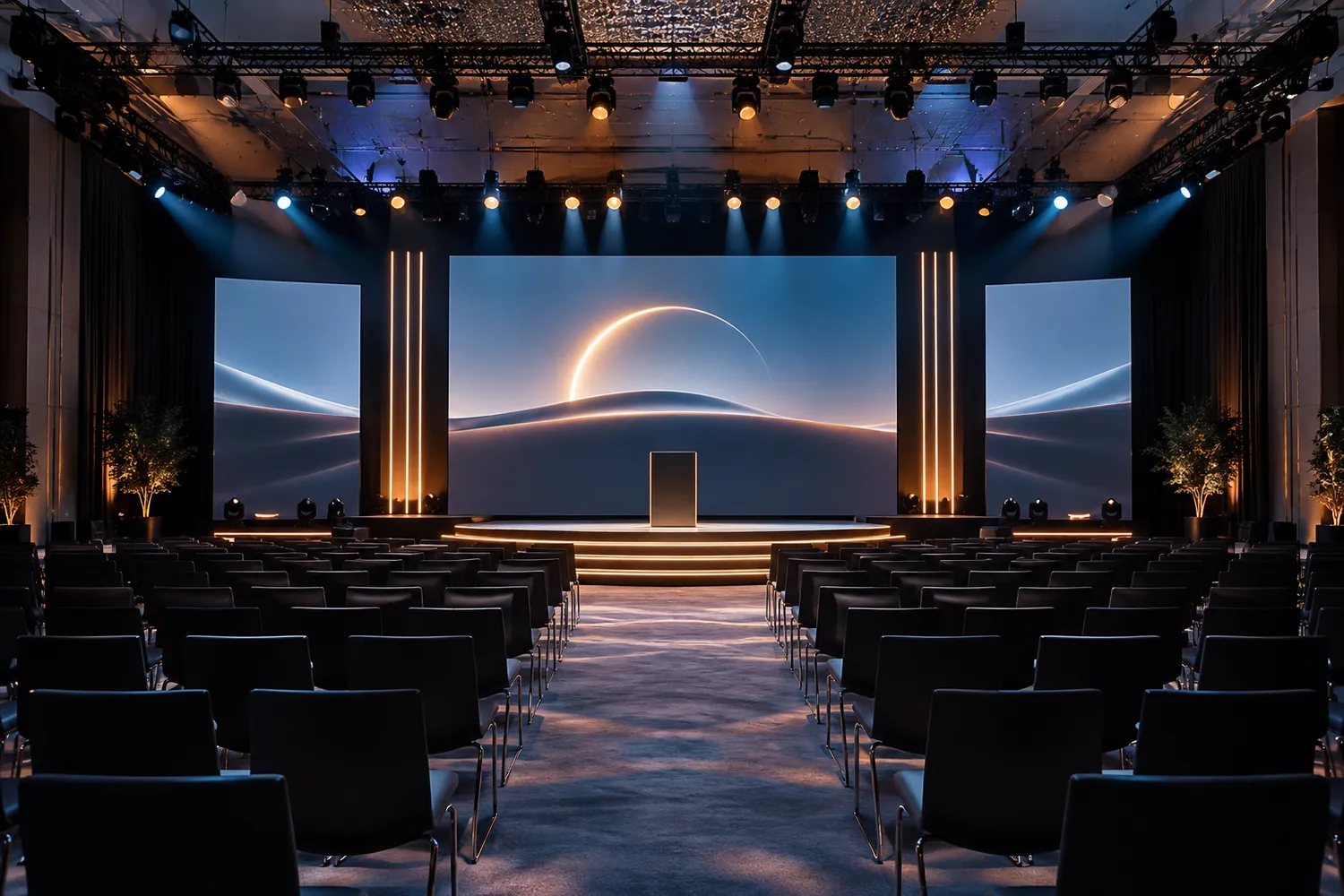
A launch event photographs well. There is a room, a stage, a countdown, people in one place at one time reacting to something new — and the photos and video from that room become the proof, months later, that a launch happened. This is exactly why launch events get chosen so often even when they are not the right tool: the visible proof of activity is satisfying whether or not the event actually moved the product forward.
The question underneath the decision
The honest question before booking a venue is not "should we do something for the launch" but "does this launch need a room full of people, or does it need distribution to people who are not in a room at all." A launch event answers the first need well. It does almost nothing for the second, and the second is usually the actual goal — getting the product in front of the people who will buy it, wherever they already are.
When a launch event genuinely earns its cost
An event works when the room itself is doing something a press release or a social post cannot: bringing together people who influence each other's decisions and would not otherwise be reachable in one push, giving press or partners a reason to cover something they would otherwise treat as routine, or letting people experience a product that genuinely needs to be touched, tasted or tried to be understood. In each of these cases, the room is not decoration around the announcement — it is the mechanism doing the actual work of the launch.
When it is vanity dressed as strategy
An event is vanity when its real function is internal: a way for the team and its stakeholders to feel that the launch was significant, with the actual reach of the announcement barely different from what a well-placed campaign would have achieved for a fraction of the cost. The signal to watch for is a launch plan where the event is the centrepiece and the actual distribution plan — who outside the room hears about this, and how — is an afterthought sketched in the final week. If nobody can answer how the message reaches people who were not invited, the event is the whole strategy, and that is rarely enough.
The honest cost comparison
A venue, catering, staging and a guest list assembled specifically to fill a room cost real money that could otherwise fund weeks of paid reach, a proper content push, or direct outreach to exactly the accounts that matter. The comparison worth making before committing to an event is not "can we afford this" but "would this budget, spent on direct distribution instead, put the product in front of more of the right people." For most launches without an genuinely event-dependent reason, the answer is yes, and the event is chosen anyway because it is the more visible, more satisfying option to plan.
A smaller test that usually settles it
A useful check: if the event were cancelled the week before and the same budget were redirected entirely to paid reach and direct outreach, would the launch actually reach fewer of the right people, or more? If the honest answer is more, the event was never the highest-leverage option — it was the default one, chosen because it looks like effort in a way a media plan does not.
Deciding with the goal in view first
The decision gets easier when it starts from the actual goal of the launch rather than from the assumption that a launch needs an event. A launch aimed at closing a small number of high-value partners benefits from a room. A launch aimed at broad market awareness usually needs reach an event cannot provide on its own budget. Our consulting team works through this test with clients before a venue gets booked, because the honest answer sometimes is that the event is right — and sometimes it is a well-photographed way to spend a launch budget on the wrong thing.
Getting the launch instrument right matters more than getting the launch loud, because filling any room still depends on distribution work that happens whether or not there is a room at all.


