
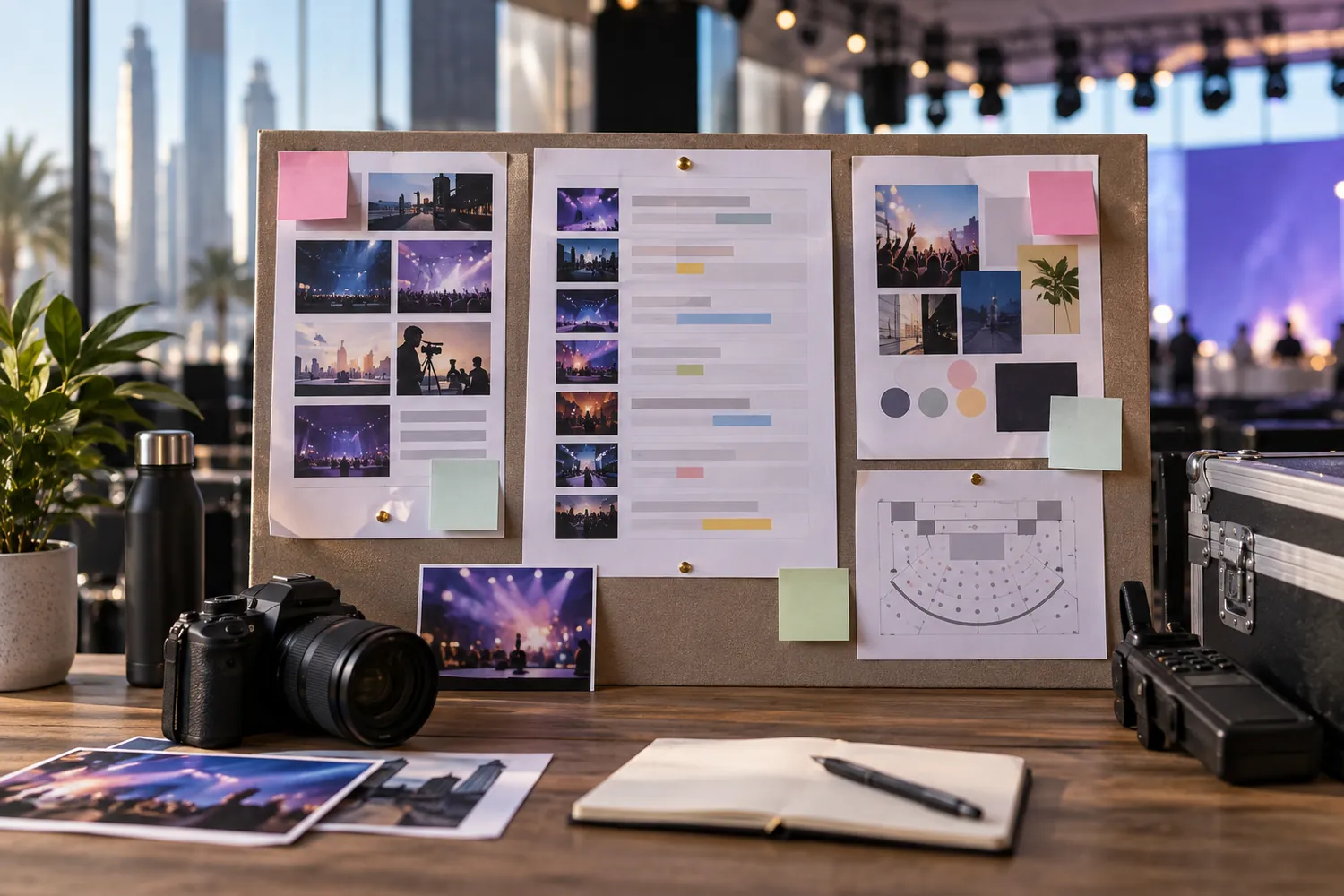
The usual approach to event content is to book a photographer or videographer, tell them to "get everything," and figure out what to do with the footage once the event is over. This produces a folder of hundreds of unsorted images and a few minutes of raw video that nobody has time to properly edit once the next project has already started. The content exists, but almost none of it was actually planned to go anywhere.
Why after-the-fact planning always underperforms
Once an event has happened, the content plan is limited to whatever was captured, in whatever order and framing seemed reasonable at the time. If nobody thought in advance about which moment would make the strongest short clip for social, or which speaker's opening line was worth a dedicated quote graphic, that shot either does not exist or exists in a form that cannot be cleanly extracted. Editing after the fact can only work with what was recorded — it cannot go back and reframe a shot that would have taken thirty extra seconds to set up correctly.
What actually needs deciding before the event
The content plan has to answer three questions before the run sheet is finalised: what specific moments are worth capturing beyond generic room-and-crowd shots, where each type of content will actually be published, and who owns turning raw footage into a finished piece once the event ends. A run sheet that already marks "key testimonial moment, need clean audio and a close shot" next to a specific agenda item produces usable content in a way that a general instruction to "cover the event" never will.
Matching capture to destination
A highlight reel for the company's own social channels needs different footage than a case study video for the sales team, and both need different footage again than the handful of press-ready stills a journalist might actually use. Deciding this before the event means the crew knows to get a clean, well-lit close-up of a specific handshake or product moment, rather than relying on pulling a usable still from footage shot for an entirely different purpose. Publishing destinations decided in advance also mean the content has somewhere to go the same week, rather than sitting in a drive while someone eventually gets around to deciding what it was for.
Designing the event itself around what needs to be captured
Once the content plan exists before the event, it can actually influence the event's design — a stage backdrop built with a clean background for interview clips, a specific two-minute window scheduled for a walkthrough shot with the room empty, a moment on the agenda reserved specifically for a quote that will anchor a recap video. None of this is possible once the event is already underway; it has to be built into the run sheet from the start, which only happens if content was part of the planning conversation rather than an afterthought handed to a crew on the day.
The team that should own this before the day
This plan does not need to be elaborate, but it does need an owner: someone who agrees the capture list with the crew in advance, confirms which platform gets which format, and is responsible for turning footage around within days rather than weeks while the event is still relevant to the audience that attended it. Our photography and video team builds this capture plan alongside the run sheet itself, because the difference between usable content and an unsorted folder is almost always decided before the doors open, not in the edit suite afterward.
The content plan matters just as much as the promotion that filled the room in the first place, because an event that fills once and produces nothing reusable has to start from zero again for the next one.


